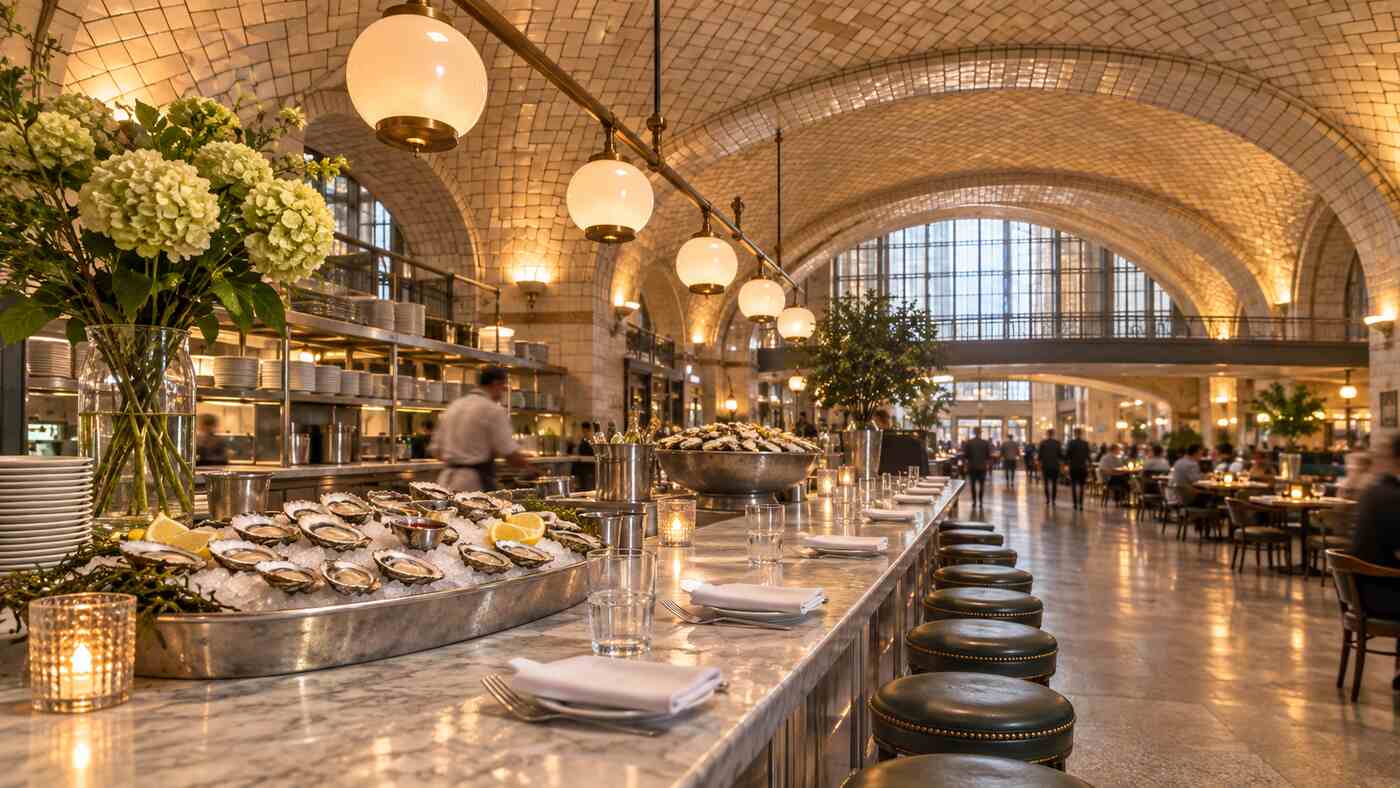
In short: Grand Central Terminal restaurants date back to the station’s opening in February 1913, when the Grand Central Terminal Restaurant, now the Oyster Bar, served its first dinner. The $175 million restoration finished in 1998 added balcony restaurants, including the Glazier Group’s Michael Jordan’s, a lower-level food court and a wine bar.
Most people pass through Grand Central to catch a train, but the terminal has been a place to eat for more than a century. This guide to Grand Central Terminal restaurants traces the Oyster Bar under its tiled vaults, the 1998 restoration that turned the balconies into dining rooms, and the arrival of Palladino’s in the old Michael Jordan’s space. Manhattan Tables is an independent history site with no link to the MTA or any restaurant.
What is Grand Central Terminal?
Grand Central Terminal is the railway station at 42nd Street and Park Avenue in Midtown Manhattan. A terminal is a station where lines end, rather than pass through. Wikipedia’s Oyster Bar entry records that the terminal opened on 2 February 1913. Architectural Digest has a photo history of the building and its restaurant.
Grand Central Terminal restaurants: the Oyster Bar, from 1913
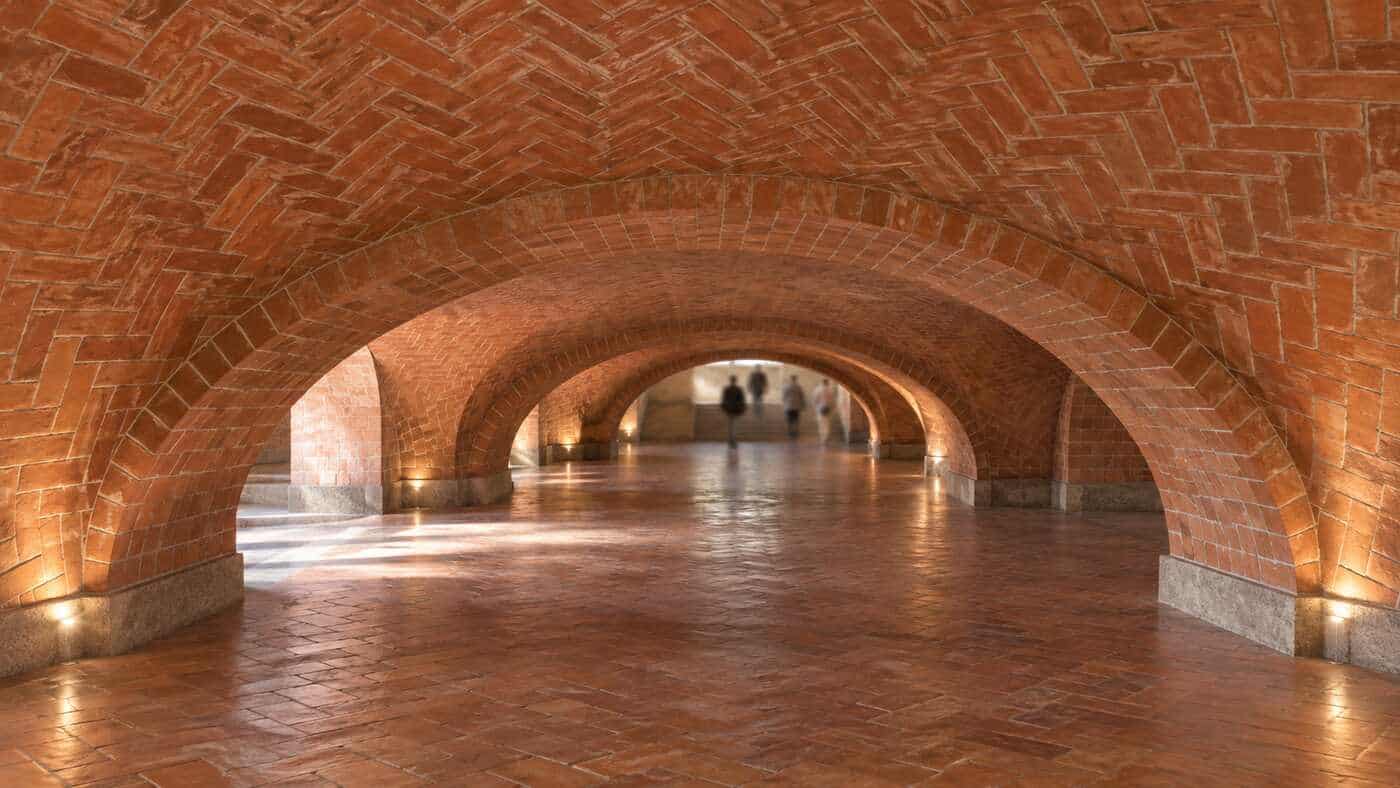
The oldest restaurant in the building opened with it. According to Wikipedia, the space opened as the Grand Central Terminal Restaurant, run by the Union News Company, and the terminal’s opening was celebrated on 1 February 1913 with a dinner there for the architects Warren and Wetmore and 100 guests. Its vaulted ceilings are Guastavino tile, and the archway outside is a whispering gallery: a person in one corner can hear someone whispering in the opposite corner.
Eater’s 2011 history describes a 440-seat restaurant that went bankrupt in 1972. The blog I Ride the Harlem Line dates its closure to 31 July 1974. Jerome Brody reopened it later in 1974, according to Eater. It closed for repairs after a fire in June 1997, and Brody sold it to its employees in 1999, Wikipedia says.
The 1998 restoration and the balcony restaurants
By the 1990s the terminal was worn and grimy. The restoration that followed changed how the building was used. In January 1998 The New York Times described a $175 million restoration with 170,000 square feet of new and renovated restaurant and retail space. It reported that Harry Cipriani had leased a 3,600-square-foot balcony space for a café and the former men’s waiting room for a restaurant, and that Matthew Kenney had leased the opposite corner for a 200-seat restaurant. Mark Grossich was turning the ornate Campbell Apartment into a wine bar and lounge, and a lower-level food court would open in phases.
The same report listed the smaller tenants that would fill the lower level and the main concourse: City Bakery, Two Boots Pizza, an Indian café called Masala from the owners of Dawat, and kiosks for Caviarteria, with the long-standing bakery Zaro’s taking three spots among 27 other tenants in the concourse retail area. The project was managed by GCT Venture, a partnership of LaSalle Partners and William Jackson Ewing. The Times expected the Glaziers’ steakhouse to launch in March; one large restaurant space in the northwest corner had not yet been leased.
That August the Times described Grand Central as reborn as a gateway to shops and restaurants. Business Insider notes that the restoration was completed in 1998 and that a small dark patch was left on the ceiling to show how dirty it had been.
Grand Central Terminal restaurants timeline
| Year | Event | Source |
|---|---|---|
| 1913 | Terminal opens, with the Grand Central Terminal Restaurant | Wikipedia |
| 1972 | Oyster Bar goes bankrupt | Eater |
| 1974 | Closes 31 July, reopened by Jerome Brody | I Ride the Harlem Line, Eater |
| 1997 | Oyster Bar fire | Wikipedia |
| 1998 | Restoration completed, Michael Jordan’s opens | The New York Times |
| 1999 | Brody sells the Oyster Bar to employees | Wikipedia |
| 2018 | Michael Jordan’s lease ends | Court records |
| 2025 | Palladino’s Steak & Seafood opens | MTA, FSR magazine |
Michael Jordan’s steakhouse: the first new restaurant
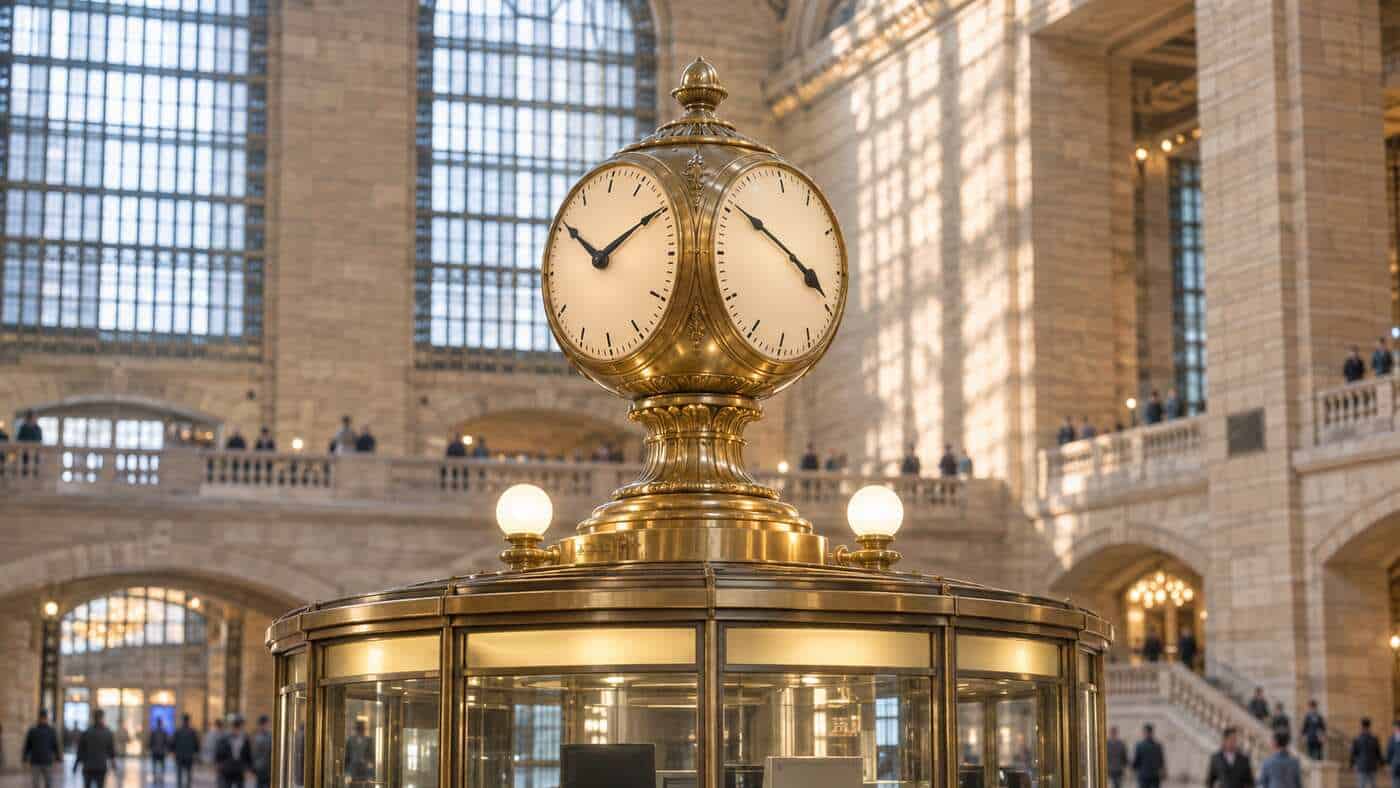
The Glazier Group’s steakhouse was the first restaurant to open in the restored terminal. The New York Times review of September 1998 described its balcony seats above the main concourse. It ran for twenty years until its lease ended on 31 December 2018. Its full story, including the David Rockwell design and the lease dispute with the MTA, is in our guide to Michael Jordan’s The Steak House at Grand Central.
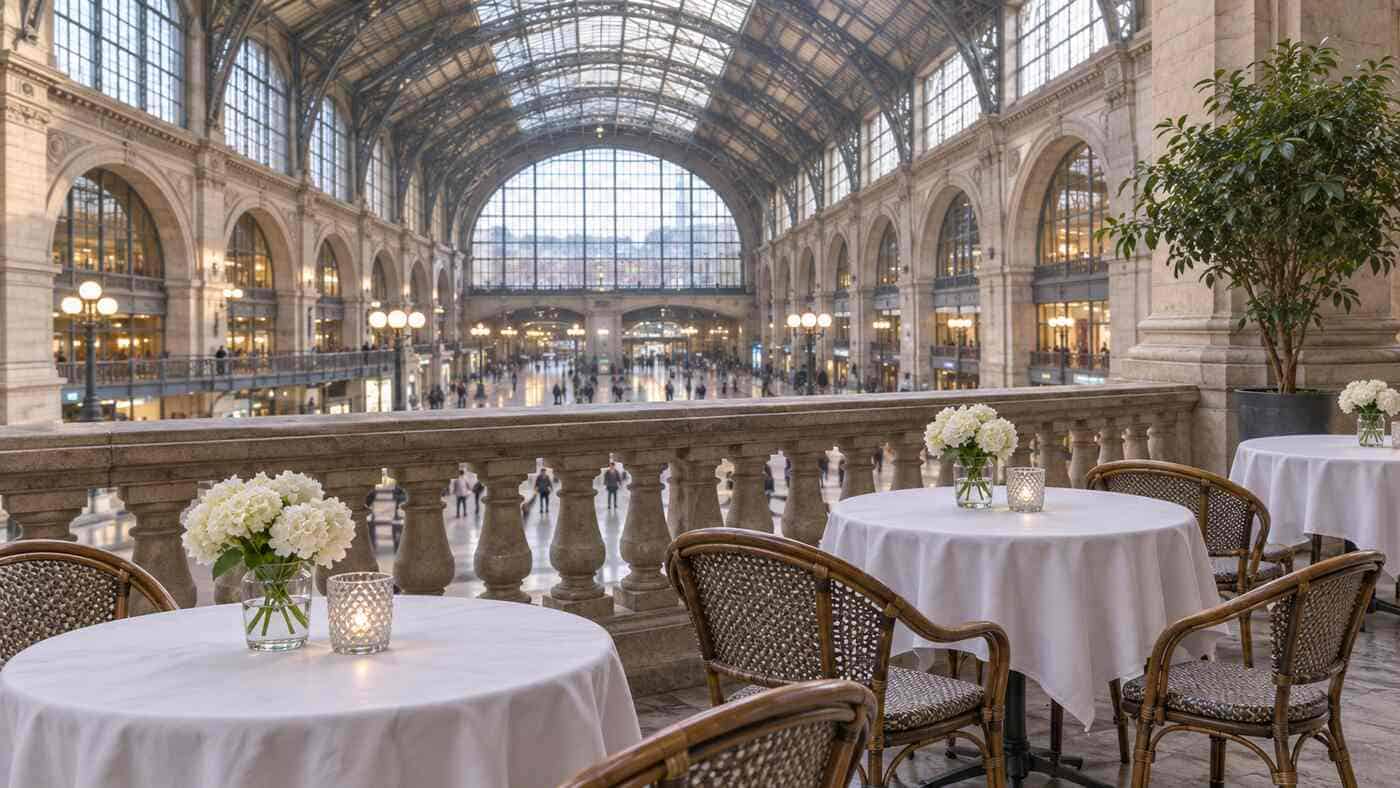
Palladino’s and the balcony today
The steakhouse space stood empty for years. In 2021 the New York Post reported plans for a new chophouse in the 8,200-square-foot space. Palladino’s Steak & Seafood opened there in 2025, according to FSR magazine, and an MTA document gives September 2025. Forbes described about 10,000 square feet and around 250 seats. The Oyster Bar, meanwhile, is still employee-owned, and Wikipedia notes that it reopened in 2021 after pandemic closures.
Key takeaways
- The Grand Central Terminal Restaurant, now the Oyster Bar, opened with the terminal in February 1913.
- The Oyster Bar closed in 1974, was revived by Jerome Brody and has been employee-owned since 1999.
- The $175 million restoration finished in 1998 added balcony restaurants, a wine bar and a food court.
- The Glazier Group’s Michael Jordan’s was the first new restaurant, from 1998 to 2018.
- Palladino’s Steak & Seafood opened in the old steakhouse space in September 2025.
Common questions
What is the oldest restaurant in Grand Central?
The Oyster Bar. It opened as the Grand Central Terminal Restaurant when the terminal opened in February 1913, and hosted a celebration dinner on 1 February for the architects and 100 guests. It has closed and reopened several times since, most recently after pandemic closures in 2020.
What is the whispering gallery at Grand Central?
It is the tiled archway in front of the Oyster Bar. Because of the curve of the Guastavino vault, a person standing in one corner can hear someone in the opposite corner, however softly they speak, according to Wikipedia’s Oyster Bar entry.
Which restaurant was on the Grand Central balcony?
From 1998 to 2018 the balcony above the main concourse held Michael Jordan’s The Steak House N.Y.C., run by the Glazier Group. Harry Cipriani also leased balcony space in 1998. Palladino’s Steak & Seafood took over the old steakhouse space in 2025.
When was Grand Central restored?
The main restoration was completed in 1998, according to Business Insider. The New York Times put its cost at $175 million in January 1998 and said it created 170,000 square feet of new and renovated restaurant and retail space, including balcony restaurants and a lower-level food court.
Who owns the Oyster Bar?
Its employees. Jerome Brody sold the restaurant to its staff in 1999, and managers bought the remaining shares between 2004 and 2008 through an employee stock ownership plan, according to Wikipedia. Staff are represented by the union UNITE HERE Local 100.
How we put this together: the restoration figures and 1998 tenants come from The New York Times; the Oyster Bar history from Wikipedia, Eater and I Ride the Harlem Line; the balcony’s later history from the New York Post, FSR, Forbes and an MTA document. See also our Glazier Group history.
Sources
- Wikipedia: Grand Central Oyster Bar & Restaurant
- Eater New York: The history of the Grand Central Oyster Bar, 2011
- I Ride the Harlem Line: A hundred years of the Oyster Bar, 2013
- Architectural Digest: Grand Central’s history in vintage photos
- The New York Times: Restaurant leases signed at Grand Central, 1998
- The New York Times: Grand Central reborn, 1998
- The New York Times: Michael Jordan, Grand Central’s new player, 1998
- Business Insider: Michael Jordan’s steakhouse, 2012
- New York Post: New chophouse for Grand Central, 2021
- FSR magazine: Palladino’s opens in Grand Central
- MTA: Grand Central retail document
- Forbes: Two recently opened New York steakhouses, 2025
Back to the Manhattan Tables home page.