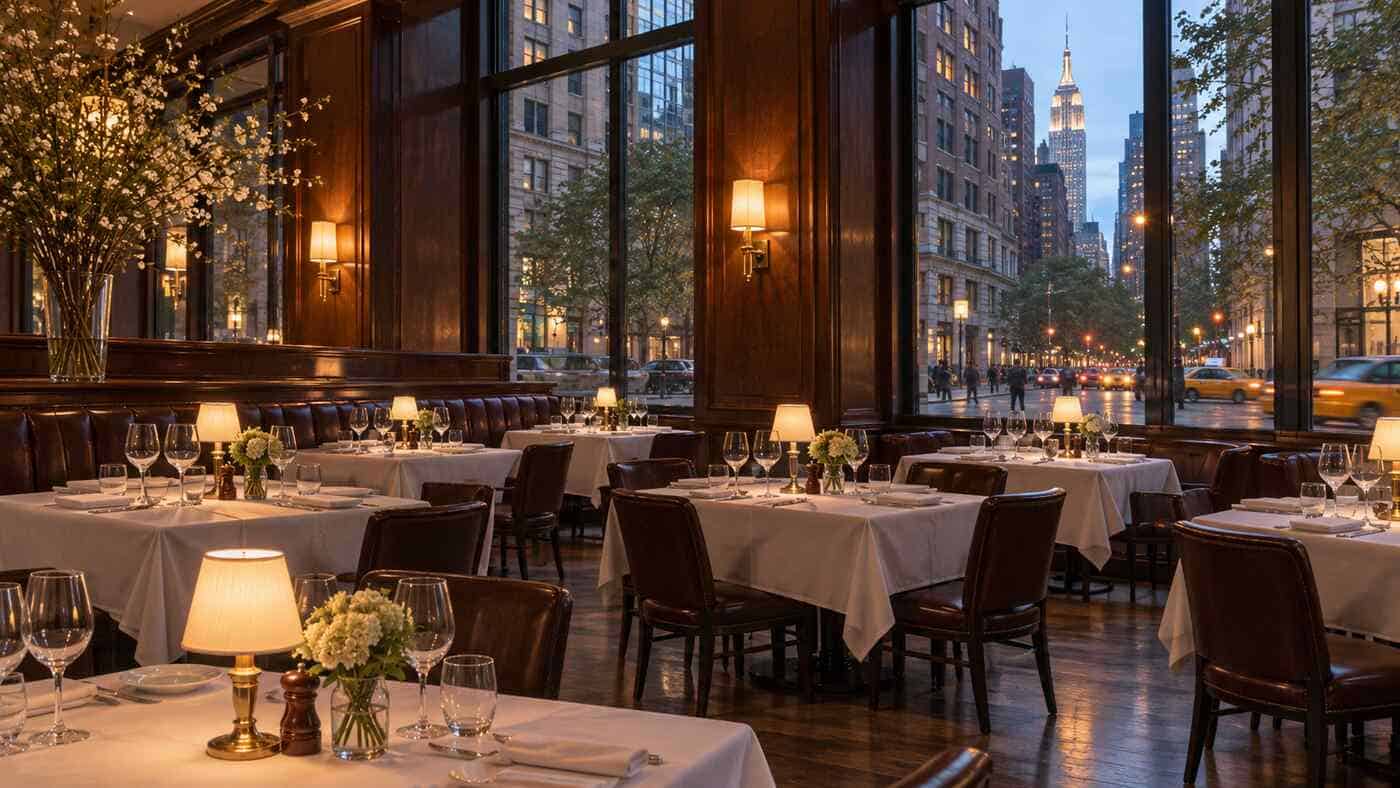
In short: the Glazier Group was the New York restaurant and events company of Peter and Penny Glazier, later joined by their son Mathew. From 1994 it ran Monkey Bar, then Michael Jordan’s The Steak House N.Y.C. at Grand Central, Strip House, Bridgewaters and Twenty Four Fifth. A 2010 bankruptcy, the 2011 sale of Strip House and Hurricane Sandy broke up the portfolio.
For about two decades the Glazier Group was one of the most visible family-run restaurant companies in Manhattan. Its rooms were theatrical, often designed by David Rockwell, and usually set inside an old building with a story. This guide follows the Glazier Group from its first bar to the end of its Grand Central lease. Manhattan Tables is an independent site and is not the Glazier Group; every fact below links to a source listed at the end.
Who were Peter and Penny Glazier?
Peter and Penny Glazier were Manhattan restaurateurs who built a business around restaurants and private events. An archived 2011 version of the company website described the Glazier Group as “an evolutionary event management team developed by Manhattan restaurateurs Peter & Penny Glazier”. It listed corporate functions, conferences and trade shows, seated dinners, weddings and private celebrations among its work. Its about page said the company was drawn to “historical environments throughout New York City”.
Two terms recur in this history. A restaurant group is a company that owns or manages several restaurants under one management team. An event venue (or catering hall) is a space rented out for weddings, galas and corporate functions, usually with in-house food and staff. The Glazier Group was both, and later court papers describe it as a management company serving restaurant affiliates that were owned directly by Peter Glazier and his family.
Monkey Bar and the first restaurants, 1994–1999
The story starts in Midtown. According to The New York Times Diner’s Journal, the Glazier Group owned Monkey Bar in the Hotel Elysée at 60 East 54th Street from 1994. The Glaziers restored the monkey murals in the bar and commissioned David Rockwell to give the back dining room a 1940s cabaret look. Our history of Monkey Bar covers the room in detail.
The next big step came at Grand Central Terminal, then being restored. In January 1998 The New York Times reported that Penny and Peter Glazier and their partners were expected to open the Michael Jordan steakhouse first among the new balcony restaurants. Court records show the lease was signed on 13 March 1997. The restaurant opened in 1998, as our guide to Michael Jordan’s The Steak House at Grand Central explains. By 2000 the couple were also known as the owners of Tapika, according to The New York Observer, which named David Walzog as executive chef of both Tapika and Michael Jordan’s.
Strip House, Bridgewaters and Twenty Four Fifth
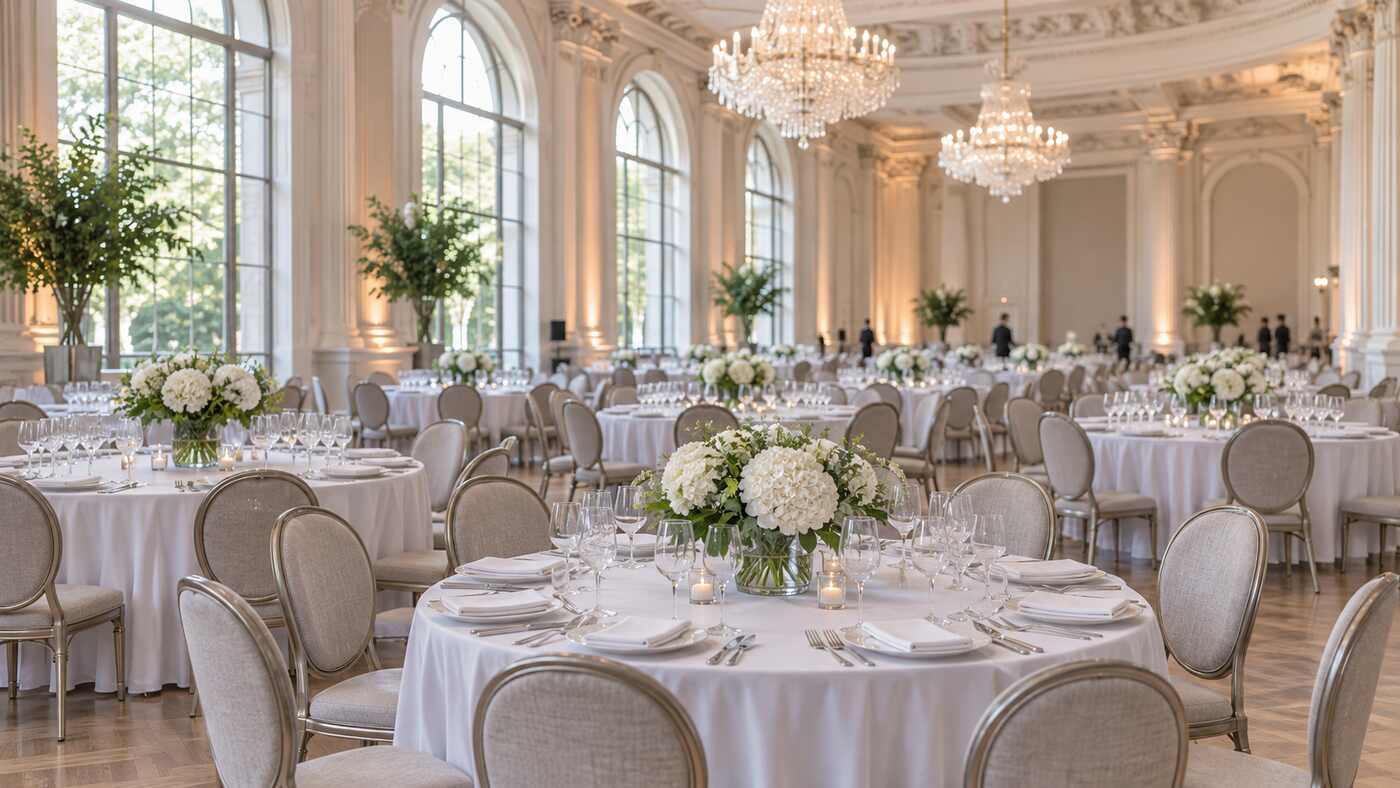
In 2000 the Glaziers opened Strip House at 13 East 12th Street, in the former home of the Italian restaurant Asti. Our Strip House history tells that story. Events grew alongside the restaurants. In an interview with BizBash, Penny Glazier described a 700-employee company running Monkey Bar, Michael Jordan’s, Strip House and Bridgewaters, and said the couple planned to open Twenty Four Fifth, an 8,400-square-foot event space in the former Fifth Avenue Hotel ballroom.
Bridgewaters, at 11 Fulton Street in the South Street Seaport, and Twenty Four Fifth, near Washington Square, became the company’s main event halls. Both are covered in our guide to Bridgewaters and the Glazier event venues.

Expansion beyond New York
In April 2003 the New York Post described a business that took in Jordan’s, two Strip House locations, Monkey Bar and three large catering venues. It reported that Peter Glazier had a deal for a Strip House in Houston and hoped to open six locations nationally. A bankruptcy court decision later recorded that in 2006 the restaurant affiliates “embarked on a rapid expansion” and refinanced their debts with a $7 million loan from General Electric Capital Corporation in September 2007.
Key dates
- 1994: the Glazier Group takes over Monkey Bar.
- 1998: Michael Jordan’s The Steak House N.Y.C. opens at Grand Central.
- 2000: Strip House opens on East 12th Street.
- 2008: Graydon Carter and partners buy Monkey Bar.
- 15 November 2010: the Glazier Group files for Chapter 11.
- December 2011: BR Guest Hospitality takes over the Strip House brand.
- 29 October 2012: Hurricane Sandy closes Bridgewaters.
- 31 December 2018: the Grand Central lease ends.

The 2010 bankruptcy and the Strip House sale
In 2008 Monkey Bar passed to the Vanity Fair editor Graydon Carter and two partners, according to the Diner’s Journal. Two years later the lender declared a default. The bankruptcy court’s post-trial decision says GECC accelerated the loan on 10 November 2010 and that the management company, but not the restaurants, filed for Chapter 11 on 15 November 2010. Grub Street, citing Crain’s, reported assets of $15.2 million and liabilities of $26.8 million.
The sale of Strip House followed. A December 2011 BR Guest Hospitality press release said BR Guest had bought the brand with its New York and Las Vegas restaurants, while the Glazier family kept Key West, Naples, Houston and Livingston, New Jersey. Reports from July 2011 placed Houston with the buyer instead, so sources conflict on that one location.

Sandy, the Grand Central exit and Brooklyn barbecue
Hurricane Sandy struck on 29 October 2012. The Real Deal reported that Bridgewaters sued its landlord, saying it had cancelled more than 50 events and lost $1.7 million in revenue. A court record shows Peter Glazier wrote on 13 November 2012 that the Twenty Four Fifth tenant had vacated its space.
Michael Jordan’s stayed at Grand Central until its lease ended on 31 December 2018. According to the New York Post, a kitchen fire in January 2018 caused heavy water damage there. The same report says the family bought Morgan’s Brooklyn Barbecue in 2019 and reopened it in November 2022 after a fire, and also opened Tiny’s Cantina and a second Morgan’s near Philadelphia.
Key takeaways
- The Glazier Group was the restaurant and events company of Peter and Penny Glazier, later joined by their son Mathew.
- Its best-known rooms were Monkey Bar, Michael Jordan’s at Grand Central, Strip House, Bridgewaters and Twenty Four Fifth.
- The management company filed for Chapter 11 on 15 November 2010 after its lender called a $7 million loan.
- BR Guest bought the Strip House brand in 2011; Hurricane Sandy closed Bridgewaters in 2012.
- The Grand Central lease ended in 2018, and the family moved on to Morgan’s Brooklyn Barbecue in 2019.
Common questions
Who owned the Glazier Group?
Peter and Penny Glazier founded and ran the company, and their son Mathew later joined them. Court papers describe the Glazier Group as a management company for restaurant affiliates that were owned directly by Peter Glazier and members of his family, including the Strip House companies in New York and Las Vegas.
Is the Glazier Group still in business?
The restaurants and halls on the old website have closed or passed to other owners. Strip House belongs to Landry’s through BR Guest, Monkey Bar is run by others and the Grand Central lease ended in 2018. The Glazier family now runs Morgan’s Brooklyn Barbecue and Tiny’s Cantina.
Why did the Glazier Group file for bankruptcy?
Its lender, General Electric Capital Corporation, declared a default on a $7 million loan in November 2010 and accelerated it. The management company filed for Chapter 11 on 15 November 2010. The restaurants themselves did not file, according to the bankruptcy court’s decision.
Is this website the Glazier Group?
No. Manhattan Tables is an independent history site. It has no connection with the Glazier family, their companies or the current owners of any restaurant named here, and it does not take bookings.
How we put this together: the company’s own description comes from the archived 2011 website; dates come from The New York Times, the New York Post, BizBash and the bankruptcy court decision; the Strip House sale comes from the BR Guest press release; Sandy comes from The Real Deal. Where reports disagree, we say so.
Sources
- Wayback Machine: The Glazier Group website, December 2011
- The New York Times Diner’s Journal: Graydon Carter buying Monkey Bar, 2008
- The New York Times: Restaurant leases signed at Grand Central, 1998
- The New York Observer: Strip House review, 2000
- BizBash: Glazier Group’s Penny Glazier
- New York Post: Food duo bucks gloomy economy, 2003
- U.S. Bankruptcy Court, S.D.N.Y.: In re Glazier Group, post-trial decision
- Grub Street: Michael Jordan’s owners file for bankruptcy, 2010
- PR Newswire: Strip House purchased by BR Guest Hospitality, 2011
- The Real Deal: Bridgewaters sues landlord after Sandy, 2012
- New York Post: Morgan’s Brooklyn Barbecue reopens, 2022