Category: Restaurant history

  • Grand Central Terminal restaurants: a history since 1913

    Grand Central Terminal restaurants: a history since 1913

    In short: Grand Central Terminal restaurants date back to the station’s opening in February 1913, when the Grand Central Terminal Restaurant, now the Oyster Bar, served its first dinner. The $175 million restoration finished in 1998 added balcony restaurants, including the Glazier Group’s Michael Jordan’s, a lower-level food court and a wine bar.

    Most people pass through Grand Central to catch a train, but the terminal has been a place to eat for more than a century. This guide to Grand Central Terminal restaurants traces the Oyster Bar under its tiled vaults, the 1998 restoration that turned the balconies into dining rooms, and the arrival of Palladino’s in the old Michael Jordan’s space. Manhattan Tables is an independent history site with no link to the MTA or any restaurant.

    What is Grand Central Terminal?

    Grand Central Terminal is the railway station at 42nd Street and Park Avenue in Midtown Manhattan. A terminal is a station where lines end, rather than pass through. Wikipedia’s Oyster Bar entry records that the terminal opened on 2 February 1913. Architectural Digest has a photo history of the building and its restaurant.
    A low vaulted archway lined with herringbone terracotta tiles in a quiet underground hall
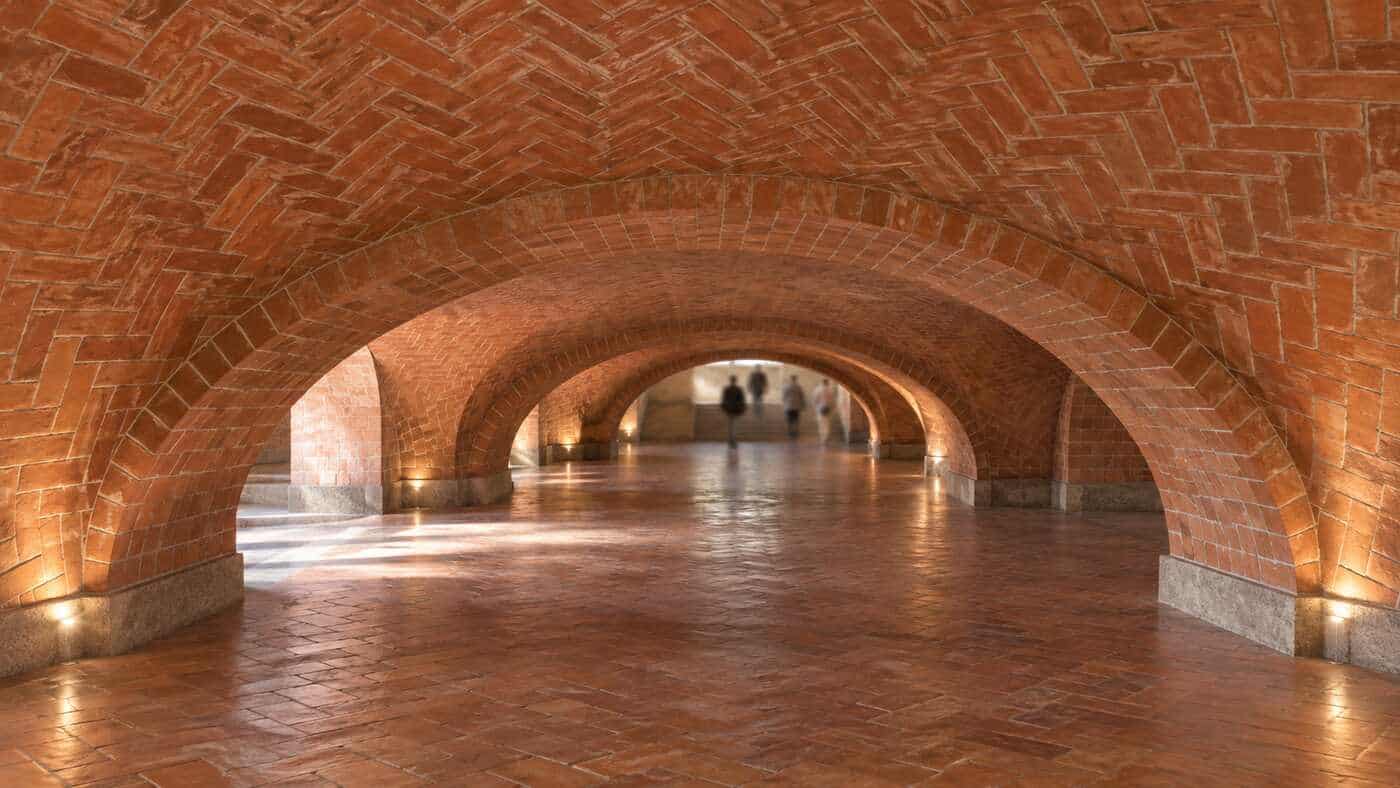
    Guastavino tile vaults cover the Oyster Bar and its whispering gallery. Illustration.

    Grand Central Terminal restaurants: the Oyster Bar, from 1913

    The oldest restaurant in the building opened with it. According to Wikipedia, the space opened as the Grand Central Terminal Restaurant, run by the Union News Company, and the terminal’s opening was celebrated on 1 February 1913 with a dinner there for the architects Warren and Wetmore and 100 guests. Its vaulted ceilings are Guastavino tile, and the archway outside is a whispering gallery: a person in one corner can hear someone whispering in the opposite corner.

    Eater’s 2011 history describes a 440-seat restaurant that went bankrupt in 1972. The blog I Ride the Harlem Line dates its closure to 31 July 1974. Jerome Brody reopened it later in 1974, according to Eater. It closed for repairs after a fire in June 1997, and Brody sold it to its employees in 1999, Wikipedia says.
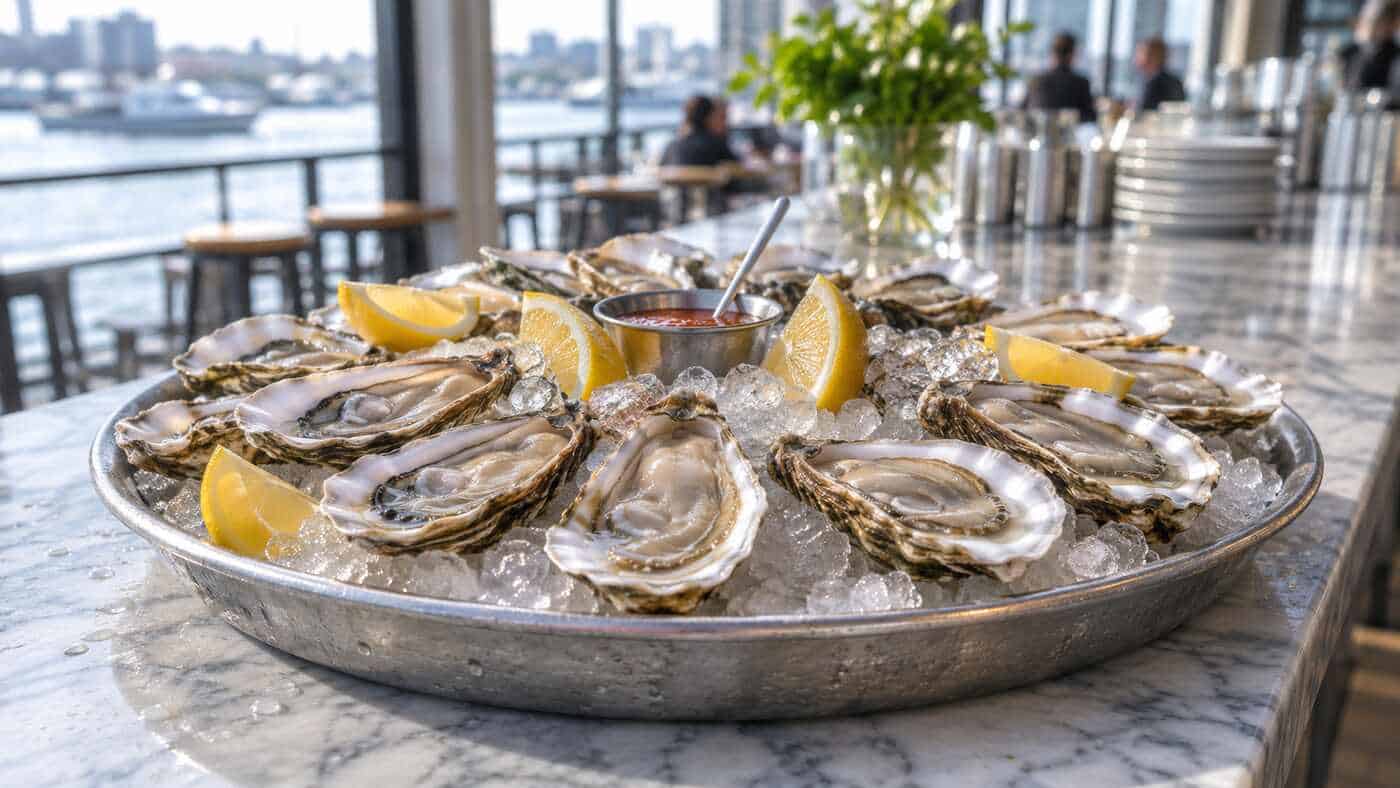
    A platter of fresh oysters on crushed ice with lemon wedges on a long counter
    Oysters have been served below the concourse since 1913. Illustration.

    The 1998 restoration and the balcony restaurants

    By the 1990s the terminal was worn and grimy. The restoration that followed changed how the building was used. In January 1998 The New York Times described a $175 million restoration with 170,000 square feet of new and renovated restaurant and retail space. It reported that Harry Cipriani had leased a 3,600-square-foot balcony space for a café and the former men’s waiting room for a restaurant, and that Matthew Kenney had leased the opposite corner for a 200-seat restaurant. Mark Grossich was turning the ornate Campbell Apartment into a wine bar and lounge, and a lower-level food court would open in phases.

    The same report listed the smaller tenants that would fill the lower level and the main concourse: City Bakery, Two Boots Pizza, an Indian café called Masala from the owners of Dawat, and kiosks for Caviarteria, with the long-standing bakery Zaro’s taking three spots among 27 other tenants in the concourse retail area. The project was managed by GCT Venture, a partnership of LaSalle Partners and William Jackson Ewing. The Times expected the Glaziers’ steakhouse to launch in March; one large restaurant space in the northwest corner had not yet been leased.

    That August the Times described Grand Central as reborn as a gateway to shops and restaurants. Business Insider notes that the restoration was completed in 1998 and that a small dark patch was left on the ceiling to show how dirty it had been.

    Grand Central Terminal restaurants timeline

    YearEventSource
    1913Terminal opens, with the Grand Central Terminal RestaurantWikipedia
    1972Oyster Bar goes bankruptEater
    1974Closes 31 July, reopened by Jerome BrodyI Ride the Harlem Line, Eater
    1997Oyster Bar fireWikipedia
    1998Restoration completed, Michael Jordan’s opensThe New York Times
    1999Brody sells the Oyster Bar to employeesWikipedia
    2018Michael Jordan’s lease endsCourt records
    2025Palladino’s Steak & Seafood opensMTA, FSR magazine
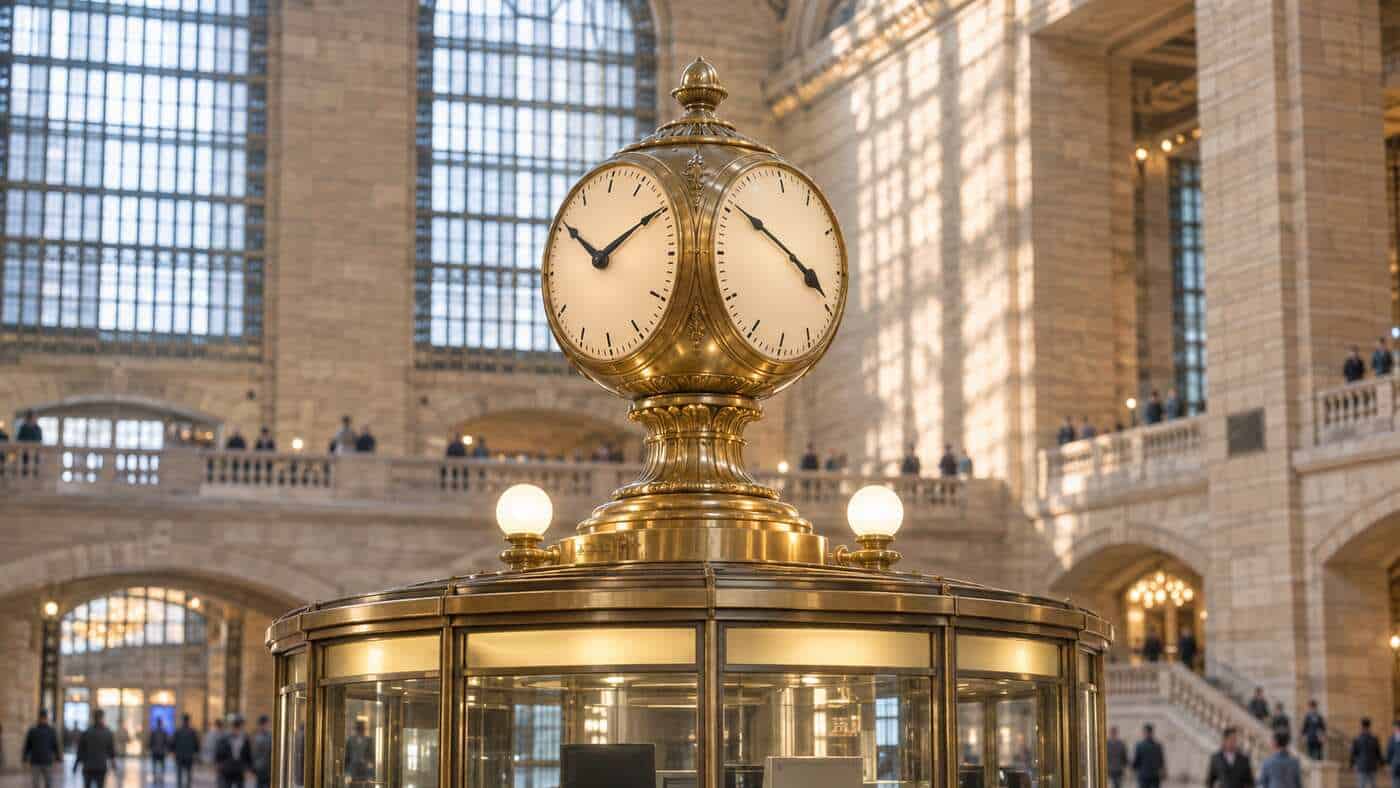
    A round brass four-faced clock above an information booth in a grand station hall
    The restored main concourse became a place to eat as well as travel. Illustration.

    Michael Jordan’s steakhouse: the first new restaurant

    The Glazier Group’s steakhouse was the first restaurant to open in the restored terminal. The New York Times review of September 1998 described its balcony seats above the main concourse. It ran for twenty years until its lease ended on 31 December 2018. Its full story, including the David Rockwell design and the lease dispute with the MTA, is in our guide to Michael Jordan’s The Steak House at Grand Central.
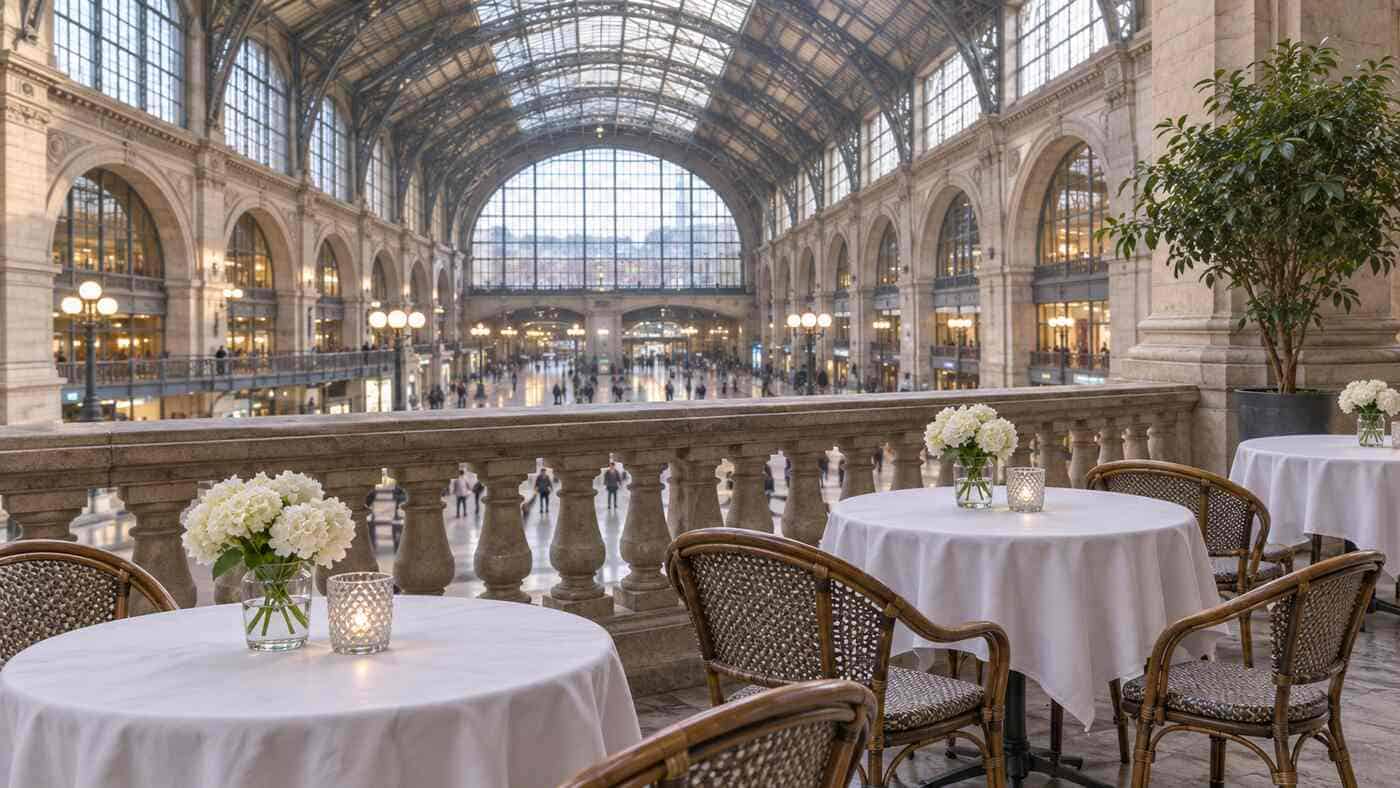
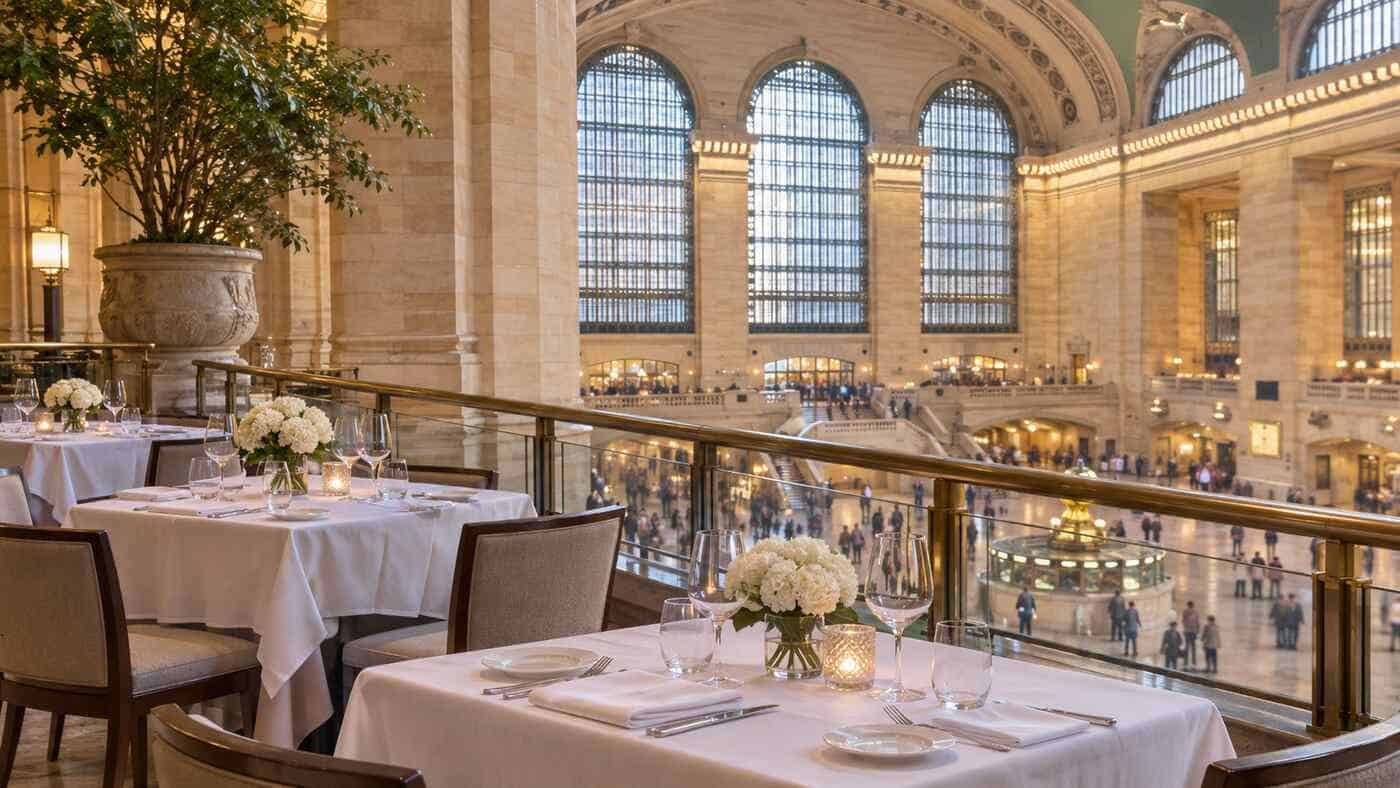
    White-clothed tables on a stone balcony overlooking a vast arched station hall
    Balcony restaurants opened after the 1998 restoration. Illustration.

    Palladino’s and the balcony today

    The steakhouse space stood empty for years. In 2021 the New York Post reported plans for a new chophouse in the 8,200-square-foot space. Palladino’s Steak & Seafood opened there in 2025, according to FSR magazine, and an MTA document gives September 2025. Forbes described about 10,000 square feet and around 250 seats. The Oyster Bar, meanwhile, is still employee-owned, and Wikipedia notes that it reopened in 2021 after pandemic closures.

    Key takeaways

    • The Grand Central Terminal Restaurant, now the Oyster Bar, opened with the terminal in February 1913.
    • The Oyster Bar closed in 1974, was revived by Jerome Brody and has been employee-owned since 1999.
    • The $175 million restoration finished in 1998 added balcony restaurants, a wine bar and a food court.
    • The Glazier Group’s Michael Jordan’s was the first new restaurant, from 1998 to 2018.
    • Palladino’s Steak & Seafood opened in the old steakhouse space in September 2025.

    Common questions

    What is the oldest restaurant in Grand Central?

    The Oyster Bar. It opened as the Grand Central Terminal Restaurant when the terminal opened in February 1913, and hosted a celebration dinner on 1 February for the architects and 100 guests. It has closed and reopened several times since, most recently after pandemic closures in 2020.

    What is the whispering gallery at Grand Central?

    It is the tiled archway in front of the Oyster Bar. Because of the curve of the Guastavino vault, a person standing in one corner can hear someone in the opposite corner, however softly they speak, according to Wikipedia’s Oyster Bar entry.

    Which restaurant was on the Grand Central balcony?

    From 1998 to 2018 the balcony above the main concourse held Michael Jordan’s The Steak House N.Y.C., run by the Glazier Group. Harry Cipriani also leased balcony space in 1998. Palladino’s Steak & Seafood took over the old steakhouse space in 2025.

    When was Grand Central restored?

    The main restoration was completed in 1998, according to Business Insider. The New York Times put its cost at $175 million in January 1998 and said it created 170,000 square feet of new and renovated restaurant and retail space, including balcony restaurants and a lower-level food court.

    Who owns the Oyster Bar?

    Its employees. Jerome Brody sold the restaurant to its staff in 1999, and managers bought the remaining shares between 2004 and 2008 through an employee stock ownership plan, according to Wikipedia. Staff are represented by the union UNITE HERE Local 100.

    How we put this together: the restoration figures and 1998 tenants come from The New York Times; the Oyster Bar history from Wikipedia, Eater and I Ride the Harlem Line; the balcony’s later history from the New York Post, FSR, Forbes and an MTA document. See also our Glazier Group history.

    Sources

    Back to the Manhattan Tables home page.
  • Monkey Bar NYC: history of the Hotel Elysée bar

    Monkey Bar NYC: history of the Hotel Elysée bar

    In short: Monkey Bar NYC is the bar and restaurant inside the Hotel Elysée at 60 East 54th Street. Opened in the 1930s or 1940s and known for its monkey murals, it closed in 1992. The Glazier Group reopened it in late 1994 with a David Rockwell design, then sold it in 2008 to Graydon Carter, who ran it until 2020.

    Monkey Bar was the first room in the Glazier Group story and the one with the longest past. It began as a hotel piano bar, and its playful murals made it a Midtown landmark long before the Glaziers arrived. This history of Monkey Bar NYC covers the original bar, the 1994 revival, the Graydon Carter years and what the room means today. Manhattan Tables is independent and has no link to the bar or hotel.

    What is Monkey Bar?

    Monkey Bar is a cocktail bar and restaurant on the ground floor of the Hotel Elysée, on East 54th Street between Madison and Park avenues. A hotel bar is a bar run inside a hotel but open to the public. Wikipedia’s Hotel Elysée entry says the room began as “just another dimly-lit hotel piano bar with mirrored paneling”. In the early 1950s it was expanded and the mirrors were replaced by a wraparound hand-painted mural by the caricaturist Charlie Vella. In 1984 the artist Diana Voyentzie added eight more monkeys. Johnny Andrews played piano at cocktail hour there from 1936 to 1990, the same entry says.

    Its reputation was built on entertainment as much as on drink. Wikipedia says the bar was known to regulars as “the place to go where jokes die”, with off-colour jokes and double-entendre songs from resident performers, including Johnny Payne from 1934 to 1964 and Mel Martin from 1945 to 1983. The hotel itself was founded in 1926 by the Swiss-born Max Haering and bought out of bankruptcy by Mayer Quain in 1937.

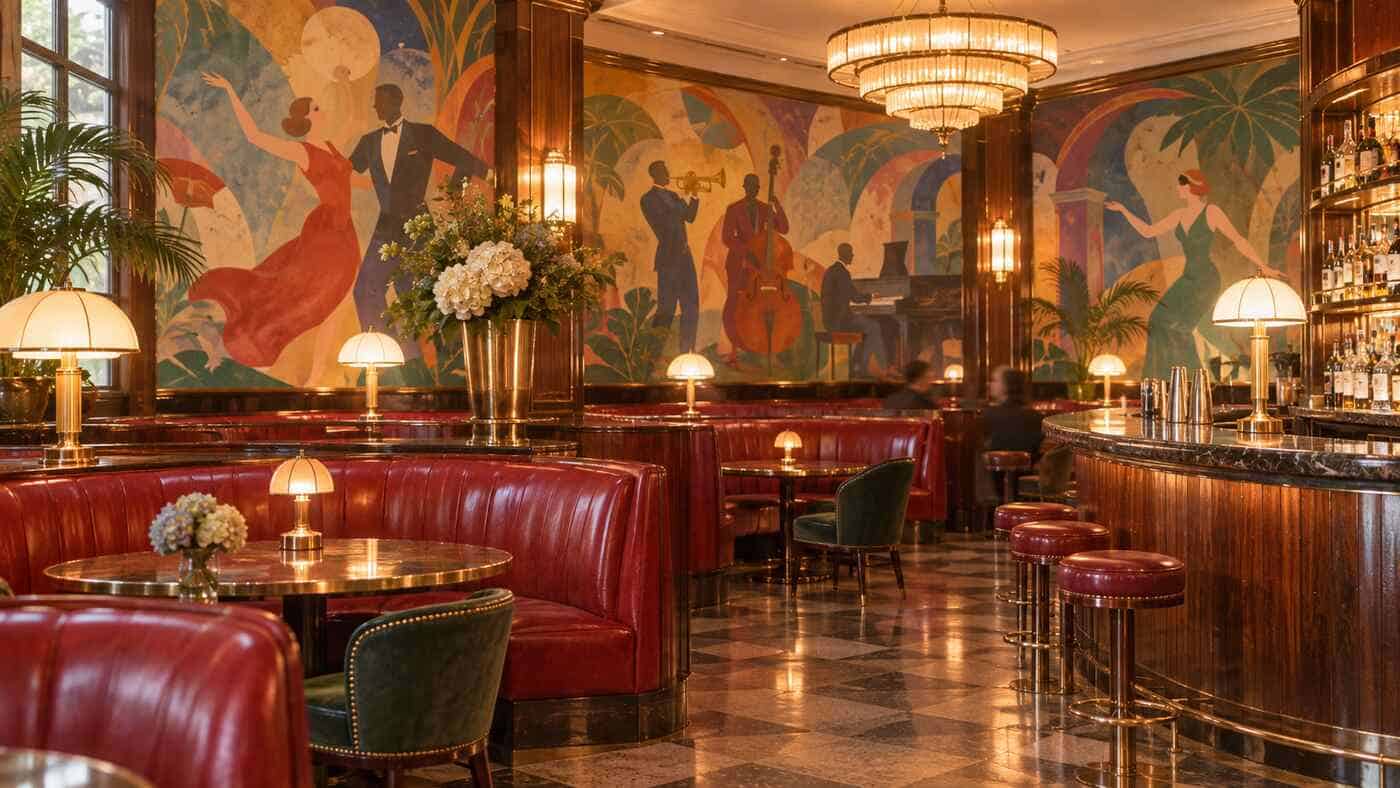
    A whimsical painted wall mural of cartoon monkeys among palm leaves above a bar
    Playful monkey murals gave the bar its identity. Illustration.

    When did Monkey Bar open?

    Sources differ on the year. The New York Times Diner’s Journal gave 1932 when reporting the 2008 sale. The National Trust for Historic Preservation gives 1936, and Wikipedia says it opened in the 1940s. We give all three, because we cannot settle the date from the sources we used. What they agree on is that by the early 1950s the bar had its murals, and the murals were its identity.

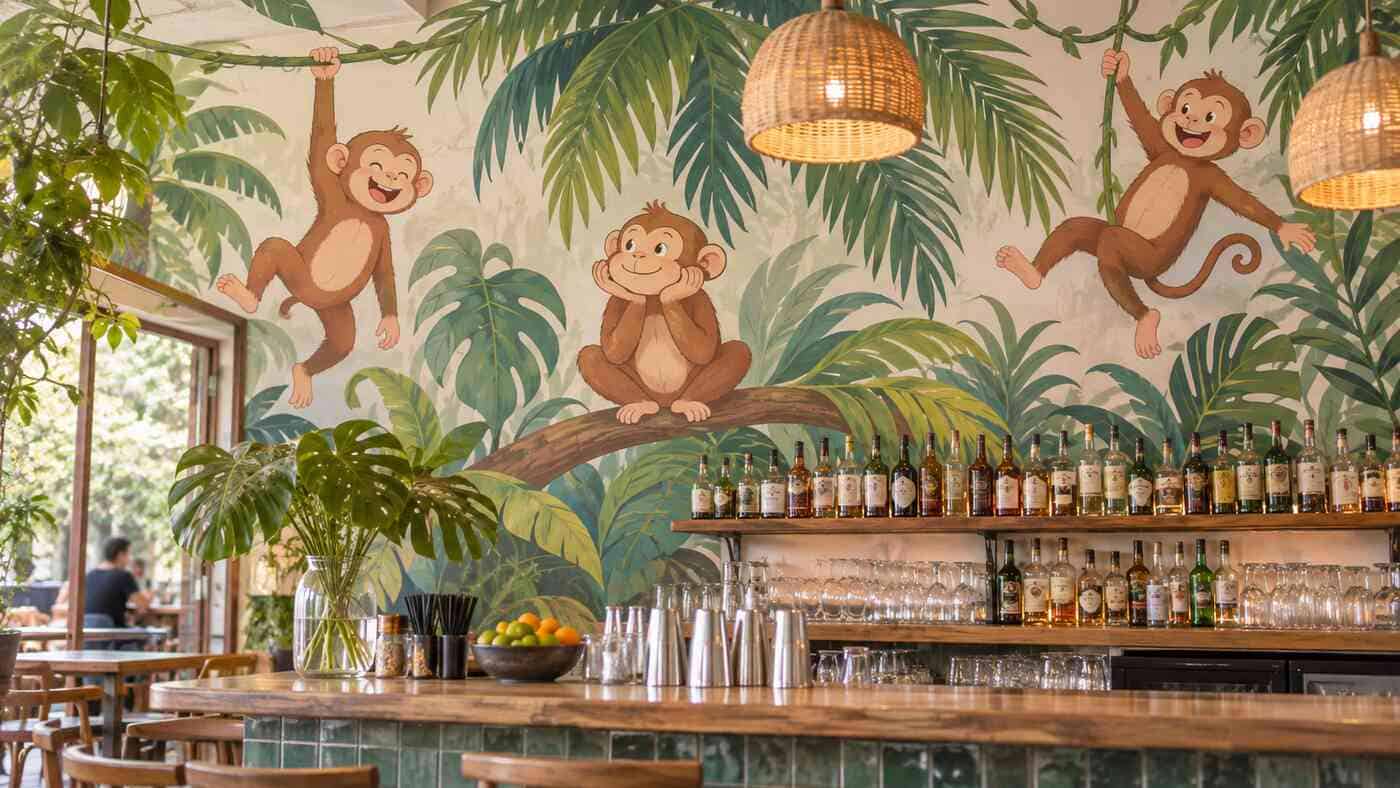
    A 1940s style cabaret dining room with curved red booths and small table lamps
    Rockwell gave the dining room a 1940s cabaret look. Illustration.

    The Monkey Bar NYC revival, 1994

    The bar closed in 1992. In December 1994 The New York Times Magazine wrote about its return. The Caterer reported that Monkey Bar reopened in late 1994 after a two-year closure, with John Schenk as chef. According to the Diner’s Journal, the Glazier Group owned Monkey Bar from 1994, restored the monkey murals and had David Rockwell give the dining room a 1940s cabaret look. Wikipedia dates the Rockwell redesign to 1995 and says Voyentzie then added more monkeys, palm trees and foliage to unify the mural.

    The bar gave the Glaziers their first public room. Penny Glazier told BizBash that an episode of Sex and the City was filmed at Monkey Bar. The success there led to Grand Central, Strip House and the event halls, covered in our history of the Glazier Group.

    Monkey Bar NYC owners and changes

    PeriodWhat happenedSource
    1932, 1936 or 1940sBar opens in the Hotel ElyséeNYT Diner’s Journal, National Trust, Wikipedia (they differ)
    Early 1950sCharlie Vella paints the monkey muralsWikipedia, Hotel Elysée
    1992Bar closesThe New York Times Magazine
    Late 1994Glazier Group reopens it, John Schenk as chefThe Caterer, NYT Diner’s Journal
    2008Graydon Carter and partners buy itNYT Diner’s Journal
    2009Edward Sorel mural addedWikipedia, Hotel Elysée
    2011Menu and room refreshedThe New York Times, National Trust
    2020Carter leavesNew York Post
    A narrow pre-war hotel facade on a Midtown side street at dusk with a green awning
    The bar sits inside the Hotel Elysée on East 54th Street. Illustration.

    The Graydon Carter years, 2008–2020

    In August 2008 the Diner’s Journal reported that Graydon Carter, then editor of Vanity Fair, was buying Monkey Bar with two partners, the hotelier Jeff Klein and Jeremy King of The Wolseley in London. Wikipedia records that a large mural by the illustrator Edward Sorel, depicting prominent figures of the Jazz Age, was added in 2009. In 2011 The New York Times reported that the restaurant was being freshened up to stay relevant, and the National Trust notes that Ken Friedman was involved in that refresh.

    Carter’s run ended in 2020. The New York Post reported in July 2020 that he was leaving Monkey Bar after 12 years.

    A classic martini glass with an olive on a polished wooden bar counter
    A Midtown cocktail bar for nine decades. Illustration.

    Why Monkey Bar NYC matters

    Monkey Bar shows the pattern the Glaziers followed. They took an old room with a story, restored what made it special and added a designer’s theatrical touch. The same approach shaped Strip House in Asti’s old room and the Grand Central steakhouse with its railway theme. The Glazier Group’s 2011 website, archived on the Wayback Machine, no longer listed Monkey Bar after the 2008 sale.

    Key takeaways

    • Monkey Bar NYC is in the Hotel Elysée at 60 East 54th Street.
    • Sources give 1932, 1936 or the 1940s for its opening, and Charlie Vella painted its monkey murals in the early 1950s.
    • The Glazier Group reopened it in late 1994 after a two-year closure, with a David Rockwell design.
    • Graydon Carter and partners bought Monkey Bar in 2008 and added an Edward Sorel mural in 2009.
    • Carter left in 2020 after 12 years.

    Common questions

    Where is Monkey Bar in New York?

    Monkey Bar is inside the Hotel Elysée at 60 East 54th Street in Midtown Manhattan, according to The New York Times. Check the hotel’s or bar’s current website before visiting, because ownership and opening hours have changed several times.

    Who owned Monkey Bar?

    The Glazier Group owned it from 1994 until 2008, when Graydon Carter and partners bought it, according to The New York Times Diner’s Journal. Carter left in 2020. Before the 1992 closure it was part of the Hotel Elysée, which Wikipedia says was founded in 1926.

    Who painted the Monkey Bar murals?

    Charlie Vella painted the original monkey murals in the early 1950s, according to Wikipedia’s Hotel Elysée entry. The Glazier Group restored them in the 1990s. In 2009 a new mural by Edward Sorel showing Jazz Age figures was added to the dining room.

    Is Monkey Bar part of a hotel?

    Yes. It sits just off the lobby of the Hotel Elysée, which Wikipedia says was founded in 1926 and is now part of Henry Kallan’s Library Hotel Collection. The bar has been run separately at times, including by the Glazier Group from 1994 to 2008 and by Graydon Carter and partners from 2008.

    Was Monkey Bar in Sex and the City?

    Penny Glazier told BizBash that an episode of Sex and the City was filmed at Monkey Bar while the Glazier Group ran it. We have not independently checked which episode.

    How we put this together: ownership dates come from The New York Times, The Caterer and the New York Post; murals and hotel details from Wikipedia; the opening date from the Times and the National Trust and Wikipedia, which disagree. The Sex and the City detail is Penny Glazier’s account, as reported.

    Sources

    Back to the Manhattan Tables home page.
  • Michael Jordan’s The Steak House at Grand Central, 1998–2018

    Michael Jordan’s The Steak House at Grand Central, 1998–2018

    In short: Michael Jordan’s The Steak House N.Y.C. was a Glazier Group steakhouse on the west balcony of Grand Central Terminal. The lease was signed in March 1997, the restaurant opened in 1998 as the first restaurant in the restored terminal and it closed when the lease ended on 31 December 2018. The basketball star licensed his name and the Glaziers ran it.

    For twenty years a steakhouse looked down on one of the most famous rooms in New York. Michael Jordan’s at Grand Central was not a sports bar: it was a grown-up dining room on a marble balcony, designed by David Rockwell. This guide explains how it came about, what it was like, why it ended in court and what replaced it. Manhattan Tables is independent and has no link to the restaurant, Michael Jordan or the Metropolitan Transportation Authority.

    What was Michael Jordan’s The Steak House N.Y.C.?

    Michael Jordan’s The Steak House N.Y.C. was a steakhouse at 23 Vanderbilt Avenue, inside Grand Central Terminal, according to a 1998 Los Angeles Times travel report that put entrées at $17 to $30. It was run by the Glazier Group under a licensing deal. Thrillist describes a 1997 deal in which Jordan licensed his name to the Glazier Group, and notes that the New York restaurant deliberately had no sports memorabilia. A licensing deal lets a business use a famous name in return for fees, while the name’s owner does not run the business day to day.

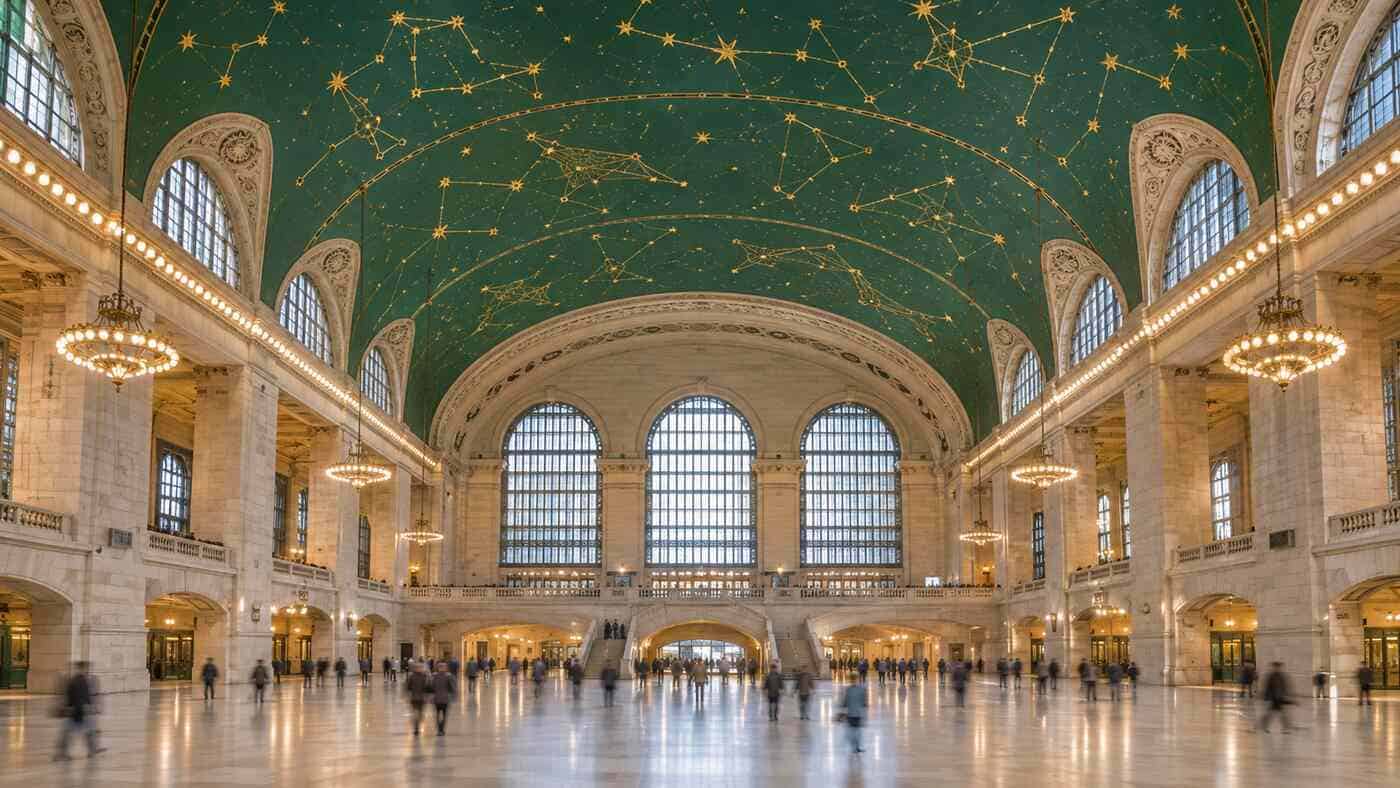
    A green vaulted ceiling painted with gold constellations above a vast station concourse
    The restaurant looked across the restored concourse ceiling. Illustration.

    The 1997 Grand Central lease and the 1998 opening

    Grand Central was in the middle of a major restoration in the late 1990s. In January 1998 The New York Times reported that restaurant leases had been signed for the terminal and that the Michael Jordan steakhouse, from Penny and Peter Glazier and partners, was expected to open first. Later court papers in Penny Port LLC v. Metropolitan Transportation Authority say the lease was signed on 13 March 1997 between the MTA and the Glazier Group.

    The restaurant opened in autumn 1998. The New York Times review that September called it the first restaurant to open in the renovated terminal, on a balcony overlooking the main concourse. That August the Times described Grand Central as reborn as a gateway to shops and restaurants. Our guide to Grand Central Terminal restaurants sets the steakhouse beside the Oyster Bar and the balcony rooms that followed.

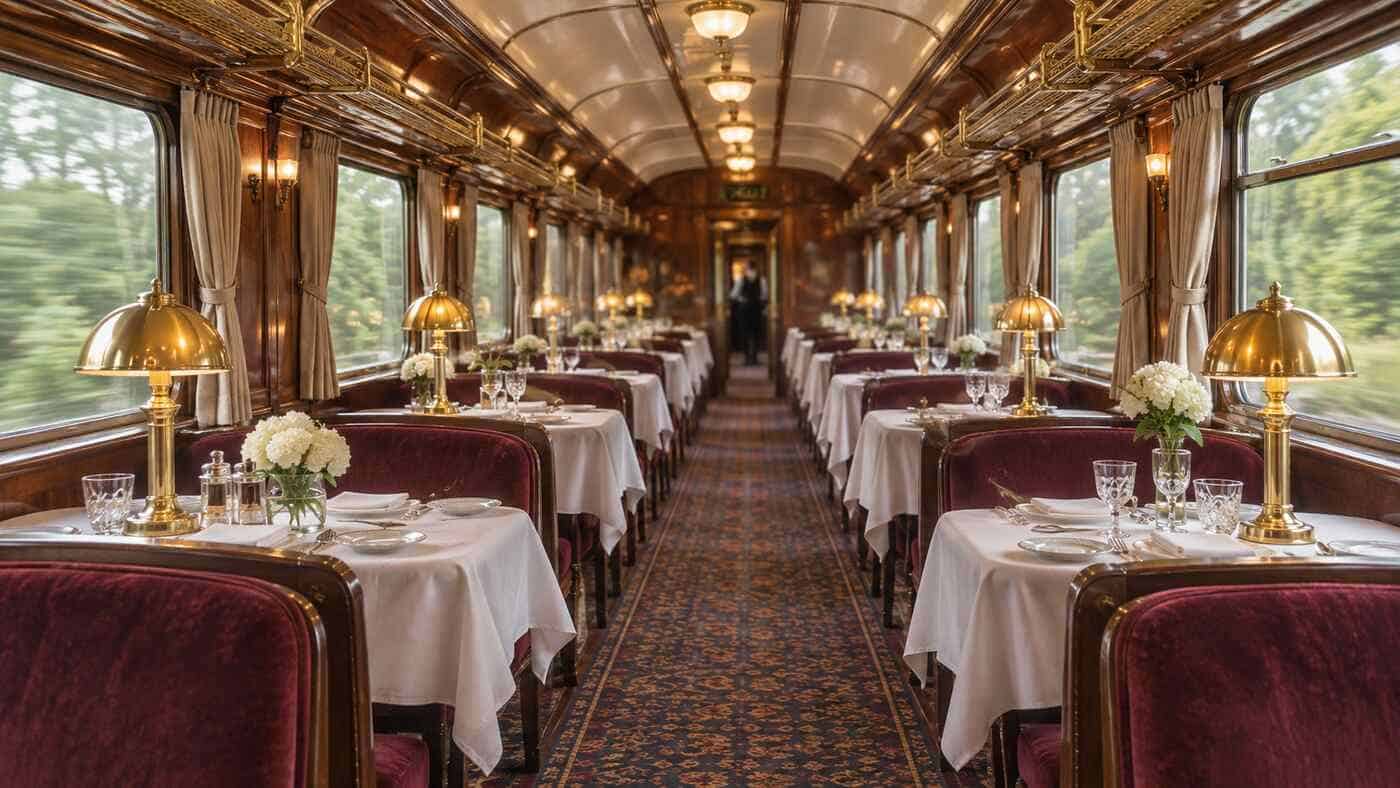
    Long rows of dining tables with brass lamps arranged like a vintage railway dining car
    The design nodded to the era of luxury trains. Illustration.

    The Michael Jordan steakhouse room on the Grand Central balcony

    David Rockwell’s design drew on the railway. A press release from the restaurant described a 1998 Rockwell design that paid homage to the 20th Century Limited, the New York Central’s luxury train, with a dining-car layout along the north balcony and a wood-panelled private room. CityGuide described about 150 seats in 7,000 square feet, and a 60-seat bar near the Vanderbilt Avenue entrance.

    The view was the draw. Diners looked across the concourse at the celestial ceiling, restored in 1998, according to Business Insider, which pointed out the small dark patch left unrestored to show how dirty the ceiling had been. In 2012 MacRumors reported that the steakhouse saw a 7 percent rise in sales after the Apple Store opened on the neighbouring east balcony.

    Michael Jordan steakhouse timeline

    DateEvent
    13 March 1997Lease signed between the MTA and the Glazier Group
    September 1998Restaurant opens on the west balcony
    November 2010Glazier Group management company files for Chapter 11
    2012Sales rise about 7 percent after the Apple Store opens
    January 2018Kitchen fire causes water damage
    31 December 2018Lease ends
    3 January 2019Premises handed back to the MTA
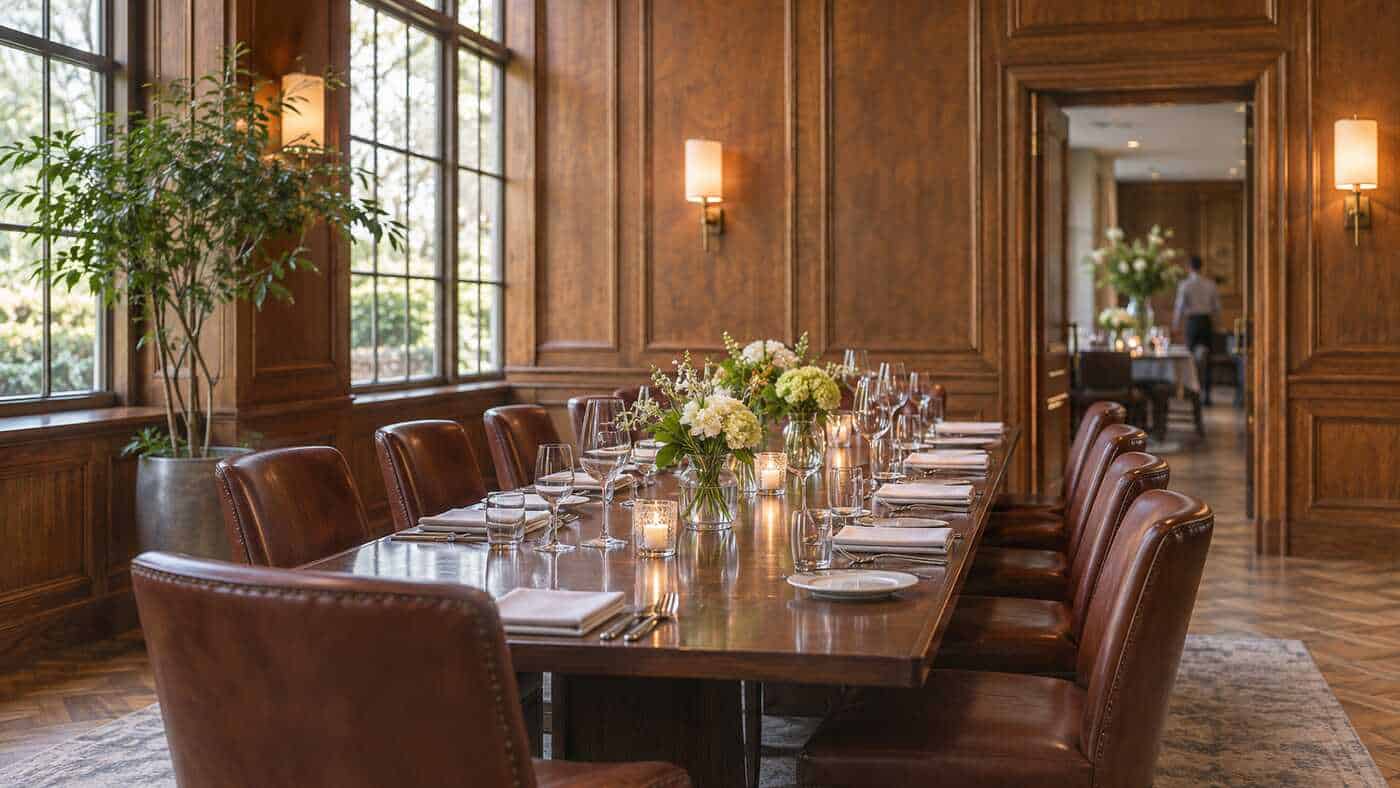
    A wood-panelled private dining room with a long table and leather chairs
    A private room sat off the main dining area. Illustration.

    Lawsuits, the Glazier Group and the end of the lease

    The restaurant survived the Glazier Group’s 2010 bankruptcy, which our Glazier Group history explains, but its last years were difficult. The operating company, Penny Port LLC, sued the MTA over leaks and remediation work near Vanderbilt Avenue. In 2021 the Appellate Division held that its claim for lost profits was barred by section 15.3 of the lease. The court papers record that the lease ended on 31 December 2018 and that the premises were relinquished on 3 January 2019.

    The New York Post reported that a kitchen fire in January 2018 led to 50,000 gallons of water being poured into the restaurant. In 2021 the Post said the 8,200-square-foot space had been empty since the restaurant left in December 2018 amid a dispute, and that the MTA planned a new lease for a chophouse.

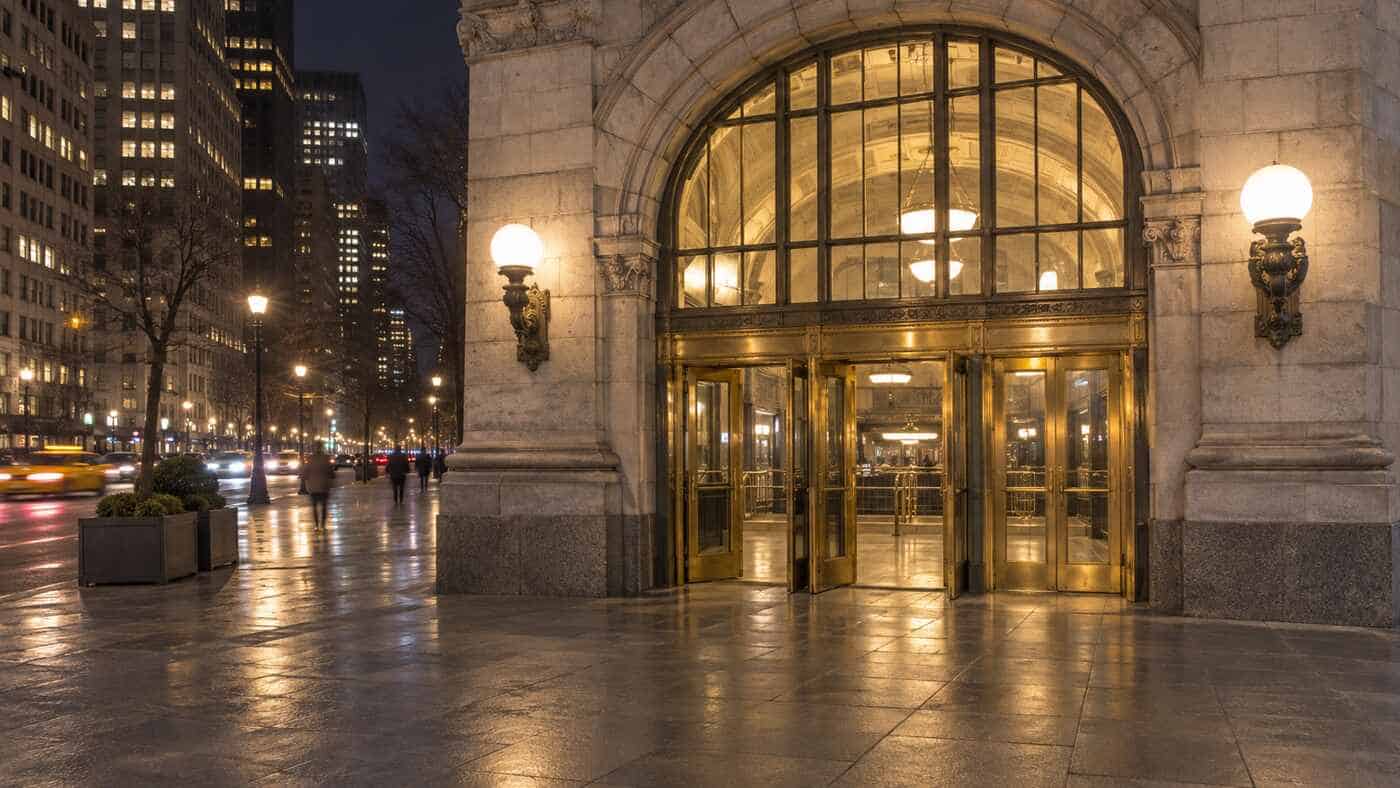
    A stone station entrance on a city avenue at night with brass doors
    The bar sat near the Vanderbilt Avenue entrance. Illustration.

    What replaced it?

    After years of vacancy, Palladino’s Steak & Seafood opened on the balcony in 2025. FSR magazine reported the opening, and an MTA document records an opening in September 2025. Forbes described a space of about 10,000 square feet seating around 250 guests. Later restaurants carrying Jordan’s name outside New York were developed with a different company, Cornerstone Restaurant Group, according to Thrillist, and Wikipedia lists the chain’s other locations.

    Key takeaways

    • Michael Jordan’s The Steak House N.Y.C. opened in 1998 as the first restaurant in the restored Grand Central.
    • The Glazier Group ran it under a 1997 licensing deal, and the lease was signed on 13 March 1997.
    • David Rockwell’s design echoed the 20th Century Limited dining cars, with about 150 seats.
    • The lease ended on 31 December 2018 after a fire and a legal dispute with the MTA.
    • Palladino’s Steak & Seafood opened in the space in 2025.

    Common questions

    Did Michael Jordan own the Grand Central steakhouse?

    No. Thrillist and the court papers describe a licensing arrangement: Jordan lent his name in a 1997 deal, and the Glazier Group signed the lease and ran the restaurant. The New York room did not use sports memorabilia as decoration, unlike many celebrity restaurants of the period.

    When did Michael Jordan’s at Grand Central close?

    The lease ended on 31 December 2018, and the operator handed the premises back to the MTA on 3 January 2019, according to court records. The New York Post reported in 2021 that the balcony space had been empty since the restaurant left in December 2018.

    What is in the old Michael Jordan’s space now?

    Palladino’s Steak & Seafood, which opened on the Grand Central balcony in September 2025, according to an MTA document and FSR magazine. Forbes described it as about 10,000 square feet with seating for around 250 guests.

    Where exactly was the restaurant in Grand Central?

    It was on the west balcony above the main concourse, with an address at 23 Vanderbilt Avenue and a bar near the Vanderbilt Avenue entrance. MacRumors described the Apple Store, which opened in 2011, as its Grand Central neighbour.

    How we put this together: lease and closing dates come from the court decisions; the opening from The New York Times; the design from the restaurant’s press release and CityGuide; later events from the New York Post, FSR, Forbes and an MTA document. We have not used any photographs of real people.

    Sources

    Back to the Manhattan Tables home page.
  • Strip House NYC: history of the 12th Street steakhouse

    Strip House NYC: history of the 12th Street steakhouse

    In short: Strip House NYC opened in 2000 at 13 East 12th Street, in the room that housed the Italian restaurant Asti for decades. Peter, Penny and Mathew Glazier hired David Rockwell to design it in red and gold. The brand spread to several states, was bought by BR Guest Hospitality in 2011 and passed to Landry’s in 2016.

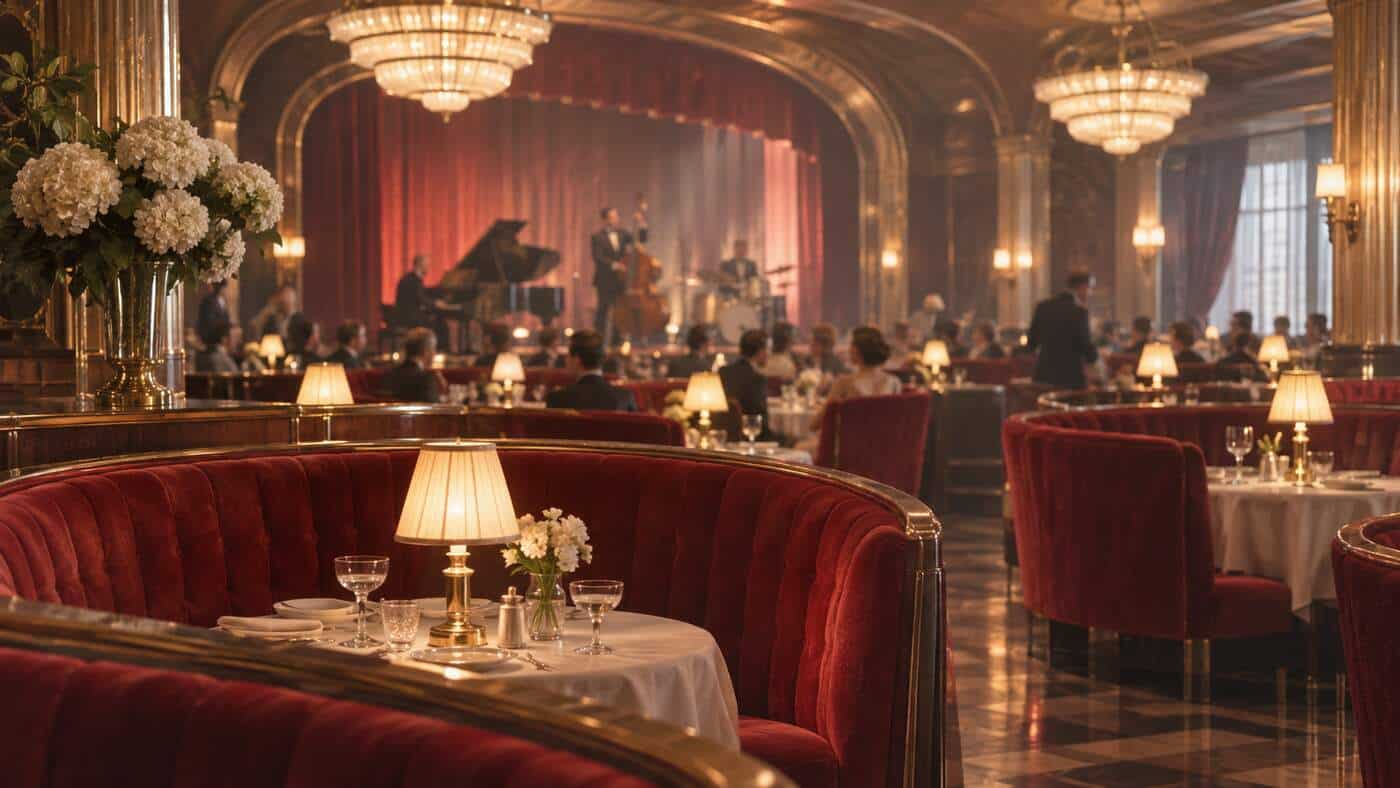
    Strip House is the Glazier Group restaurant most people still know, because it is still open under other owners. Its look was the point: red flocked walls, crimson banquettes and old photographs of burlesque and opera performers. This history of Strip House NYC covers where the room came from, who built it, how it grew and how it changed hands. Manhattan Tables is independent and has no link to the restaurant or its owners.

    What is Strip House?

    Strip House is a steakhouse chain whose flagship is at 13 East 12th Street in Greenwich Village. A steakhouse is a restaurant built around grilled beef, usually aged prime cuts, with side dishes ordered separately. According to Wikipedia’s Strip House entry, the restaurant was opened in 2000 by Peter, Penny and Mathew Glazier, and its executive chef is John Schenk. A 2011 BR Guest press release said Strip House was “credited with introducing the concept of the modern steakhouse”.

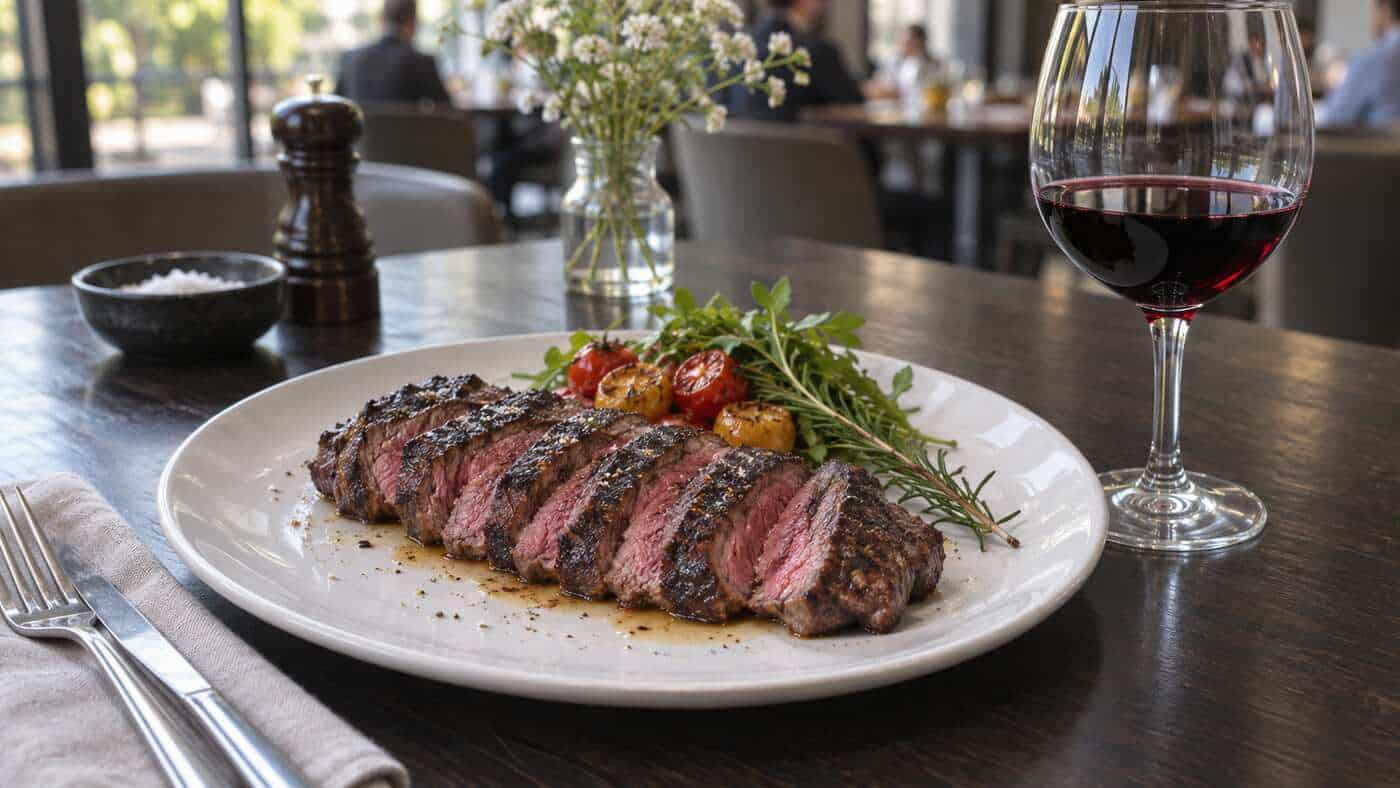
    A sliced strip steak on a white plate beside a glass of red wine on a dark table
    The menu was built around prime strip steak. Illustration.

    Asti, the room before Strip House

    The address had a long life before the steaks. Wikipedia’s entry on Asti says the Italian restaurant at 13 East 12th Street was opened in 1924 by Adolph Mariani and closed on New Year’s Eve 1999. Wikipedia notes that many of its waiters were professional opera singers who performed for guests. New York magazine’s review of Strip House noted that the space had housed “the venerable Asti” for decades, and that Rockwell had rewired the Depression-era room.

    That history shaped the new room. In its first review The New York Times described Rockwell’s red flocked wallpaper, crimson quilted banquettes and walls covered with vintage photographs of burlesque and opera performers, some of which came from Asti. The theme of the photographs gave the restaurant its name and its playful tone.

    Rows of gilt picture frames with blank sepia prints on a red flocked wall
    Framed vintage photographs from the Asti era lined the walls. Illustration.

    The 2000 opening and the first reviews

    Strip House opened in autumn 2000. Moira Hodgson reviewed it for The New York Observer in September under the headline “Another Kind of Strip Joint: It’s Broiled, Not Burlesque”. New York magazine described walls in “bordello shades of scarlet and gold” and named David Walzog as executive chef and co-owner. The restaurant, it said, was named for his signature New York strip, aged and broiled with a crunchy crust, with porterhouse, rib chop and goose-fat potatoes also on the menu. Entrées cost $22 to $31 at the time. The Times review listed Wayne Brachman as pastry chef.

    The reviewers treated Strip House as a new kind of steakhouse: a downtown room with a sense of humour, rather than the wood-panelled clubs of Midtown. That idea, more than any single dish, was what the Glazier Group later tried to export.

    Strip House at a glance

    ItemDetailSource
    Address13 East 12th Street, ManhattanWikipedia, Asti entry
    Opened2000BR Guest press release
    FoundersPeter, Penny and Mathew GlazierWikipedia, Strip House entry
    DesignerDavid RockwellNew York magazine
    Opening chefDavid WalzogNew York magazine
    Sold toBR Guest Hospitality, December 2011BR Guest press release
    Later parentLandry’s, from 2016Wikipedia, Strip House entry
    A very tall layered chocolate cake on a stand in a dim restaurant
    Pastry was part of the original team. Illustration.

    Expansion: Houston, New Jersey, Florida and Las Vegas

    The Glaziers set out to take the formula national. In 2003 the New York Post reported a deal for a Strip House in Houston and a goal of six locations. Houston opened in 2004 at the Shops at Houston Center, according to CultureMap Houston. By the time of its 2010 bankruptcy, Nation’s Restaurant News reported, the Glazier Group owned six Strip House restaurants in New York, New Jersey, Florida, Texas and Nevada.

    The Glazier Group’s own 2011 website listed Strip House branches in Houston, New Jersey and Palm Beach Gardens. The wider history of that expansion and the debts behind it is in our history of the Glazier Group.

    A map of the United States on a desk with pins in several cities
    By 2010 the brand had spread to several states. Illustration.

    The 2011 sale to BR Guest

    In July 2011 Eater New York reported that Stephen Hanson, head of BR Guest, was buying the Strip House brand. The press release confirmed the deal in December 2011. It said the transition took place on Monday 5 December, that more than 120 employees in New York and Las Vegas would stay on, and that the Glazier family kept the Key West, Naples, Houston and Livingston restaurants. Eater’s July report had placed Houston with Hanson, so accounts of that location conflict.

    Houston did not last. CultureMap reported that the landlord locked Strip House Houston out over unpaid rent in July 2012. Wikipedia records that Landry’s acquired BR Guest, and with it Strip House, in 2016.

    Key takeaways

    • Strip House NYC opened in 2000 at 13 East 12th Street, the former home of Asti.
    • David Rockwell designed the red and gold room, with vintage photographs on the walls.
    • The Glaziers expanded the brand to six locations across five states.
    • BR Guest Hospitality bought the brand in December 2011, and Landry’s acquired BR Guest in 2016.
    • Sources disagree on who kept the Houston restaurant in 2011.

    Common questions

    Who owns Strip House now?

    Strip House is part of Landry’s, which acquired its previous owner, BR Guest Hospitality, in 2016. BR Guest had bought the brand from the Glazier family in December 2011. Check the restaurant’s own website for current locations and hours.

    Why is it called Strip House?

    The name plays on two things: the strip steak on the menu and the vintage photographs of burlesque performers on the walls. The New York Times review in 2000 described the photographs, some inherited from Asti, the Italian restaurant that had occupied the room since 1924.

    When did Strip House open?

    Strip House opened at 13 East 12th Street in 2000. The New York Observer reviewed it in September 2000 and The New York Times in October 2000. BR Guest’s 2011 press release also gives 2000 as the opening year.

    What was on the original Strip House menu?

    New York magazine’s 2000 review described a menu built around an aged New York strip, sold singly or sliced on a board for two, with porterhouse, rib chop and a Wednesday Filet Rossini with foie gras and truffle. Sides included truffle creamed spinach and goose-fat potatoes. Entrées were $22 to $31 then.

    What was Asti?

    Asti was an Italian restaurant at 13 East 12th Street, opened in 1924 by Adolph Mariani and closed on New Year’s Eve 1999. Many of its waiters were professional opera singers who performed for diners, according to Wikipedia. Strip House took over the room and some of its vintage photographs.

    Was Strip House a Glazier Group restaurant?

    Yes. Peter, Penny and Mathew Glazier opened it, and it was the Glazier Group’s main restaurant brand until the December 2011 sale to BR Guest. Our guide to Michael Jordan’s at Grand Central covers the group’s other steakhouse.

    How we put this together: opening details come from the 2000 reviews in The New York Times, New York magazine and The New York Observer; the Asti history from Wikipedia; the expansion from the New York Post, CultureMap and Nation’s Restaurant News; the sale from Eater and the BR Guest press release. Where they disagree we say so.

    Sources

    Back to the Manhattan Tables home page.
  • The Glazier Group: history of a NYC restaurant family

    The Glazier Group: history of a NYC restaurant family

    In short: the Glazier Group was the New York restaurant and events company of Peter and Penny Glazier, later joined by their son Mathew. From 1994 it ran Monkey Bar, then Michael Jordan’s The Steak House N.Y.C. at Grand Central, Strip House, Bridgewaters and Twenty Four Fifth. A 2010 bankruptcy, the 2011 sale of Strip House and Hurricane Sandy broke up the portfolio.

    For about two decades the Glazier Group was one of the most visible family-run restaurant companies in Manhattan. Its rooms were theatrical, often designed by David Rockwell, and usually set inside an old building with a story. This guide follows the Glazier Group from its first bar to the end of its Grand Central lease. Manhattan Tables is an independent site and is not the Glazier Group; every fact below links to a source listed at the end.

    Who were Peter and Penny Glazier?

    Peter and Penny Glazier were Manhattan restaurateurs who built a business around restaurants and private events. An archived 2011 version of the company website described the Glazier Group as “an evolutionary event management team developed by Manhattan restaurateurs Peter & Penny Glazier”. It listed corporate functions, conferences and trade shows, seated dinners, weddings and private celebrations among its work. Its about page said the company was drawn to “historical environments throughout New York City”.

    Two terms recur in this history. A restaurant group is a company that owns or manages several restaurants under one management team. An event venue (or catering hall) is a space rented out for weddings, galas and corporate functions, usually with in-house food and staff. The Glazier Group was both, and later court papers describe it as a management company serving restaurant affiliates that were owned directly by Peter Glazier and his family.

    An old restaurant ledger and reservation book on a dark wooden desk under a brass lamp
    The group grew from one bar to a portfolio of restaurants and event halls. Illustration.

    Monkey Bar and the first restaurants, 1994–1999

    The story starts in Midtown. According to The New York Times Diner’s Journal, the Glazier Group owned Monkey Bar in the Hotel Elysée at 60 East 54th Street from 1994. The Glaziers restored the monkey murals in the bar and commissioned David Rockwell to give the back dining room a 1940s cabaret look. Our history of Monkey Bar covers the room in detail.

    The next big step came at Grand Central Terminal, then being restored. In January 1998 The New York Times reported that Penny and Peter Glazier and their partners were expected to open the Michael Jordan steakhouse first among the new balcony restaurants. Court records show the lease was signed on 13 March 1997. The restaurant opened in 1998, as our guide to Michael Jordan’s The Steak House at Grand Central explains. By 2000 the couple were also known as the owners of Tapika, according to The New York Observer, which named David Walzog as executive chef of both Tapika and Michael Jordan’s.

    Round banquet tables set with white linen in a high-ceilinged ballroom before guests arrive
    Events were as important to the business as restaurant dining. Illustration.

    Strip House, Bridgewaters and Twenty Four Fifth

    In 2000 the Glaziers opened Strip House at 13 East 12th Street, in the former home of the Italian restaurant Asti. Our Strip House history tells that story. Events grew alongside the restaurants. In an interview with BizBash, Penny Glazier described a 700-employee company running Monkey Bar, Michael Jordan’s, Strip House and Bridgewaters, and said the couple planned to open Twenty Four Fifth, an 8,400-square-foot event space in the former Fifth Avenue Hotel ballroom.

    Bridgewaters, at 11 Fulton Street in the South Street Seaport, and Twenty Four Fifth, near Washington Square, became the company’s main event halls. Both are covered in our guide to Bridgewaters and the Glazier event venues.

    A stack of legal papers and a pen on a courthouse bench in soft light
    The 2010 Chapter 11 case covered the management company, not the restaurants. Illustration.

    Expansion beyond New York

    In April 2003 the New York Post described a business that took in Jordan’s, two Strip House locations, Monkey Bar and three large catering venues. It reported that Peter Glazier had a deal for a Strip House in Houston and hoped to open six locations nationally. A bankruptcy court decision later recorded that in 2006 the restaurant affiliates “embarked on a rapid expansion” and refinanced their debts with a $7 million loan from General Electric Capital Corporation in September 2007.

    Key dates

    • 1994: the Glazier Group takes over Monkey Bar.
    • 1998: Michael Jordan’s The Steak House N.Y.C. opens at Grand Central.
    • 2000: Strip House opens on East 12th Street.
    • 2008: Graydon Carter and partners buy Monkey Bar.
    • 15 November 2010: the Glazier Group files for Chapter 11.
    • December 2011: BR Guest Hospitality takes over the Strip House brand.
    • 29 October 2012: Hurricane Sandy closes Bridgewaters.
    • 31 December 2018: the Grand Central lease ends.
    A wet cobblestone street at dusk with closed shopfronts after a storm
    Hurricane Sandy closed the Seaport venue in 2012. Illustration.

    The 2010 bankruptcy and the Strip House sale

    In 2008 Monkey Bar passed to the Vanity Fair editor Graydon Carter and two partners, according to the Diner’s Journal. Two years later the lender declared a default. The bankruptcy court’s post-trial decision says GECC accelerated the loan on 10 November 2010 and that the management company, but not the restaurants, filed for Chapter 11 on 15 November 2010. Grub Street, citing Crain’s, reported assets of $15.2 million and liabilities of $26.8 million.

    The sale of Strip House followed. A December 2011 BR Guest Hospitality press release said BR Guest had bought the brand with its New York and Las Vegas restaurants, while the Glazier family kept Key West, Naples, Houston and Livingston, New Jersey. Reports from July 2011 placed Houston with the buyer instead, so sources conflict on that one location.

    A black barbecue smoker beside a stack of firewood in a brick courtyard
    The family later turned to barbecue in Brooklyn. Illustration.

    Sandy, the Grand Central exit and Brooklyn barbecue

    Hurricane Sandy struck on 29 October 2012. The Real Deal reported that Bridgewaters sued its landlord, saying it had cancelled more than 50 events and lost $1.7 million in revenue. A court record shows Peter Glazier wrote on 13 November 2012 that the Twenty Four Fifth tenant had vacated its space.

    Michael Jordan’s stayed at Grand Central until its lease ended on 31 December 2018. According to the New York Post, a kitchen fire in January 2018 caused heavy water damage there. The same report says the family bought Morgan’s Brooklyn Barbecue in 2019 and reopened it in November 2022 after a fire, and also opened Tiny’s Cantina and a second Morgan’s near Philadelphia.

    Key takeaways

    • The Glazier Group was the restaurant and events company of Peter and Penny Glazier, later joined by their son Mathew.
    • Its best-known rooms were Monkey Bar, Michael Jordan’s at Grand Central, Strip House, Bridgewaters and Twenty Four Fifth.
    • The management company filed for Chapter 11 on 15 November 2010 after its lender called a $7 million loan.
    • BR Guest bought the Strip House brand in 2011; Hurricane Sandy closed Bridgewaters in 2012.
    • The Grand Central lease ended in 2018, and the family moved on to Morgan’s Brooklyn Barbecue in 2019.

    Common questions

    Who owned the Glazier Group?

    Peter and Penny Glazier founded and ran the company, and their son Mathew later joined them. Court papers describe the Glazier Group as a management company for restaurant affiliates that were owned directly by Peter Glazier and members of his family, including the Strip House companies in New York and Las Vegas.

    Is the Glazier Group still in business?

    The restaurants and halls on the old website have closed or passed to other owners. Strip House belongs to Landry’s through BR Guest, Monkey Bar is run by others and the Grand Central lease ended in 2018. The Glazier family now runs Morgan’s Brooklyn Barbecue and Tiny’s Cantina.

    Why did the Glazier Group file for bankruptcy?

    Its lender, General Electric Capital Corporation, declared a default on a $7 million loan in November 2010 and accelerated it. The management company filed for Chapter 11 on 15 November 2010. The restaurants themselves did not file, according to the bankruptcy court’s decision.

    Is this website the Glazier Group?

    No. Manhattan Tables is an independent history site. It has no connection with the Glazier family, their companies or the current owners of any restaurant named here, and it does not take bookings.

    How we put this together: the company’s own description comes from the archived 2011 website; dates come from The New York Times, the New York Post, BizBash and the bankruptcy court decision; the Strip House sale comes from the BR Guest press release; Sandy comes from The Real Deal. Where reports disagree, we say so.

    Sources